Why One-Person Companies Need a Workspace Agent
Running a one-person company means doing the work of five. Here's why workspace agents — not chat tools — fit how solo operators actually work.
Hello, I'm Nova. I had coffee last week with a friend who runs a tiny consulting practice — one person, no employees, decent income, perpetually one inbox away from a meltdown. She showed me her tab situation. Forty-seven open tabs. Three documents she'd been "about to finish" for two weeks. A Slack she'd stopped checking on Tuesday because she'd hit some invisible threshold and just couldn't.
Her question to me was: "Do I just need more discipline, or is there actually a tool problem here?"
I've been thinking about that conversation since. Because the more I look at how solo operators actually work, the more I think it's a genuine tool problem — and I think ai workspace agents for solo operators are the category that's quietly trying to solve it. Whether they're ready yet is a separate question. Let me share what I've been seeing.
The one-person company reality
Doing the work of sales, ops, content, and support at once
A one-person company isn't a small version of a real company. It's a different shape. In a five-person team, you have specialization — the content person does content, the ops person does ops, handoffs are formal. In a one-person company, all of that lives in one head, and the switching cost between roles is the real bottleneck. You don't lose time doing the work. You lose it transitioning between modes.
The numbers around this category are getting hard to ignore. Solo-founded startups jumped from 23.7% in 2019 to 36.3% by mid-2025, and most of the new businesses registered in the U.S. in recent years are non-employer entities. So this isn't a fringe pattern anymore — it's how a lot of work is structured now. The tooling, though, is still mostly designed for teams.
Why the existing AI stack hits a ceiling here
If you're solo and you've been adding AI tools for a year, you've probably ended up with: a chat tool (or three), a workflow builder, a writing tool, maybe a research tool, a calendar AI, a meeting transcriber, a CRM with "AI features." Each one helps. Nothing connects.
The result is what I keep calling AI tab fatigue — you have a powerful assistant in seven different windows, and none of them know what the others are doing. The cognitive overhead of routing your own work between them quietly eats most of the time savings. That's the ceiling. Not the AI itself. The fact that intelligence lives in fragments instead of in your work.
Why chat tools alone aren't enough
I want to be careful here because chat tools are still the most useful thing on most people's desks. Including mine. But for a one-person company, they have specific limits worth naming.
Context resets with every new chat
You finish a strategy session with the model, close the tab, and the next morning you're back to "let me explain what I'm working on." Context windows have grown — Claude, ChatGPT, and Gemini all handle long conversations now — but a window is temporary working space, not memory. Hindsight's engineering team made this distinction sharply: a bigger context window "delays the pain. It does not remove the underlying limitation."
For a solo operator, this matters more than for a team. A team has shared docs, a shared Slack, ambient context everyone absorbs. You don't have that. You are the shared context. When your tools forget, the re-establishing tax falls entirely on you.
No memory of your standards, style, or decisions
This is the one that bugs me most. You spend an afternoon in a chat tool training it on how you write, what you don't say, who your customer is. The output gets sharp. You ship it. Tomorrow, in a new chat, that's all gone.
Some tools have rolled out persistent memory features, but the implementations are still uneven — most cap memory at a few thousand tokens of summary, not the full grain of how you actually work. I've put many hours into a chat session and watched it produce something I really liked, then opened a new one and gotten a generic response to the same question. Honestly? That gap is where solo operators feel the most disappointment. It's not that the model is dumb. It's that nothing about your specific operation persists.
Why workflow builders miss the mark too
Just to be fair to the alternative — workflow builders like Zapier and Make have their own ceiling for solo work, and it's a different one.
Mixed, judgment-heavy work doesn't fit nodes
Your typical Tuesday: research a prospect, edit a draft, reply to a client question, reconcile an invoice, respond to a podcast booking, finish a proposal. None of these are "every time X, do Y." They're one-offs that need judgment. A workflow builder is a hammer for nails. A solo operator's day is mostly screws. As Anthropic's research team notes in their guide on agent design, workflows are the right call for "well-defined tasks" — and most solo work, frankly, isn't.
The setup cost is a second job
Even when you do find a process that's automatable, building it in a node-based tool takes hours. You have to design the trigger, map the nodes, handle errors, test it. For a solo founder, that hour you spent building the automation is an hour you weren't billing or shipping. Math only works if the workflow runs hundreds of times. Most one-person work doesn't.
What a workspace agent changes for a solo operator
Okay, so here's the actual argument. Workspace agents — meaning AI that lives inside the environment where your work already happens, with persistent context, file access, and the ability to execute multi-step tasks — fit one-person company work differently.
I want to be clear: I'm describing the category, not endorsing any specific product. Some of these are good. Some are over-promising. The category is real even if individual tools are still uneven.
Context that carries across your actual work
The shift here is from "AI in a tab" to "AI in a workspace." The agent sees the files you've been editing, the docs you keep coming back to, the projects you're juggling. You don't re-explain your business at the start of every session. The context isn't stuffed into a prompt — it's structurally present.
For solo operators, this is where most of the daily friction lives. The cost of being a one-person company is the constant re-loading of your own brain into whatever tool you opened. A workspace that holds that loaded state is a meaningful unlock.
Reusable execution instead of repeated prompting
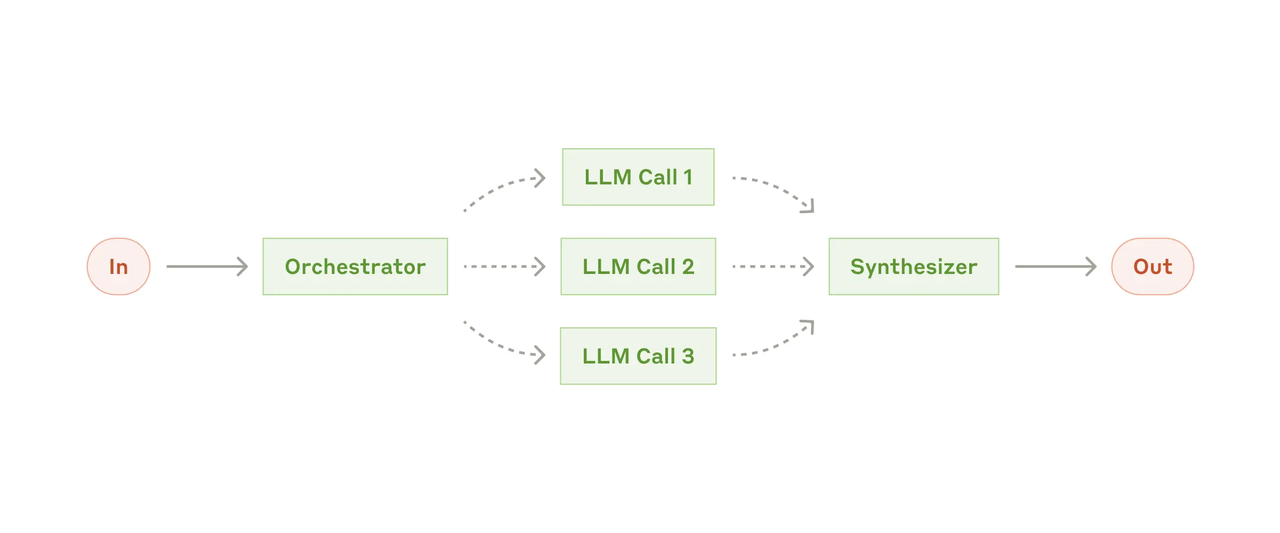
There's a difference between asking an AI to do something every time, and codifying a piece of work so it runs the same way next time without you re-prompting. The Anthropic engineering team described this elegantly as the move from "finding the right words for your prompts" toward "configuring the context most likely to generate desired behavior." That sentence sounds technical but the user-facing version is: teach it once, reuse it.
In practice, this is the part that compounds for solo work. You build a small piece of execution — a way you process incoming client briefs, a way you draft sales follow-ups, a way you turn a podcast appearance into three pieces of content. Each one becomes infrastructure instead of a fresh task. The first month feels slow. By month three, it starts to feel like leverage.
Working inside files and tools you already use
The other thing solo operators don't have time for is migrating their work somewhere else. The agents that fit this audience read your existing files, work in your existing browser, and interact with the tools you already pay for. Not "import everything into our new platform." More like "an intelligence layer over the work you're already doing."
This is one of the cleaner alignments between the rise of solo founders and the rise of agentic AI — Gartner expects 40% of enterprise apps to embed task-specific agents by end of 2026, and the consumer/operator-facing version of that wave is just starting to land.
What it still won't do for you
I want to be honest about this part because most articles in this space skip it.
It won't replace your judgment or your relationships
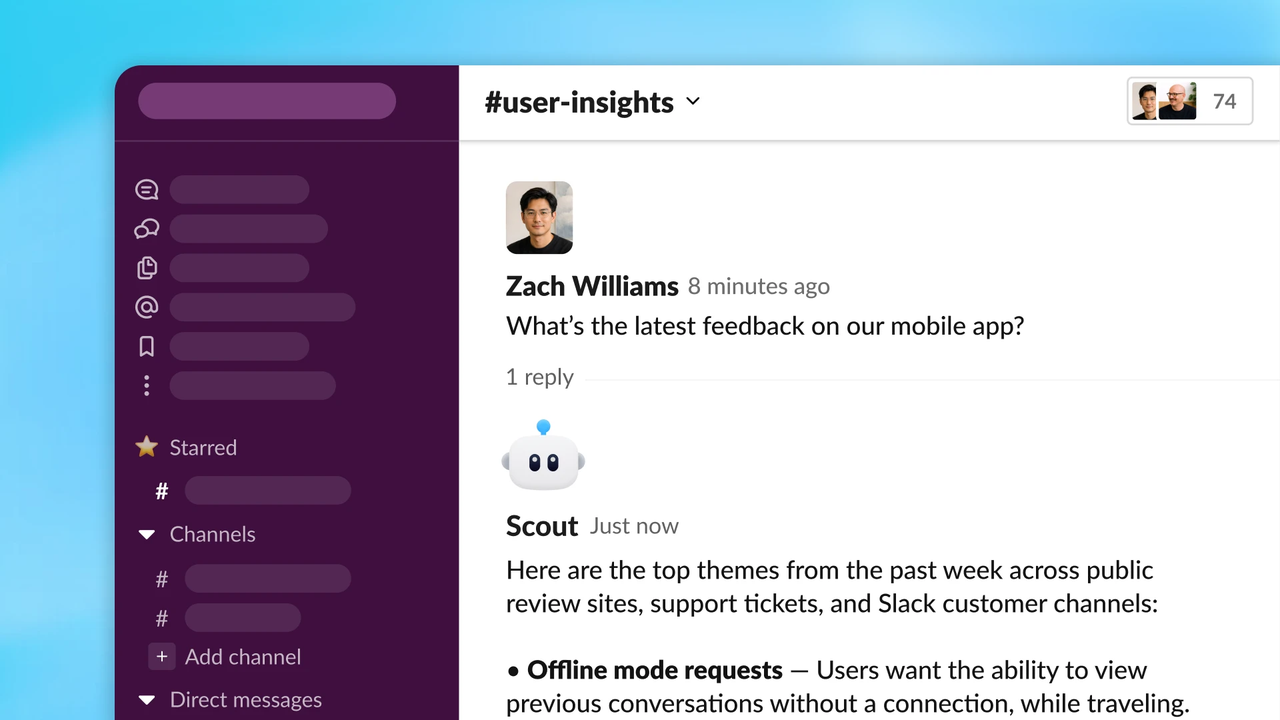
The actual hard parts of a one-person business — figuring out who your customer really is, deciding what to charge, knowing when to say no, being present in client conversations — none of that is delegable to an agent. Anyone selling you "an AI that runs your business" is selling you something that doesn't exist yet. The agent helps you execute faster on decisions you've already made. It doesn't make decisions.
I've watched solo founders try to outsource the wrong layer — the judgment layer — and end up with output that's technically efficient and strategically off. That's the failure mode I see most often.
It won't fix an undefined business
If you don't know who you're selling to, what they pay for, or how you actually deliver, an agent will help you generate more of the wrong thing faster. The pre-condition for any of this paying off is having a clear-enough operation to point an agent at. Workspace agents amplify clarity. They don't create it.
I haven't seen a tool yet that solves "I don't know what my business is." I'm not sure one's coming.
Deciding if a workspace agent fits your stage
Quick rule of thumb. A workspace agent is probably worth trying if:
You're solo or near-solo, doing 5+ different kinds of work in a week
You can already articulate your offer, voice, and customer in a paragraph
The thing slowing you down is switching cost between tasks, not the tasks themselves
You've already hit the ceiling of single-window chat tools — you've felt the "it forgot again" frustration
It's probably not worth it yet if:
You're still figuring out what you do
Your work is genuinely high-volume and repetitive (workflow builders fit better)
You're in a regulated field where the judgment layer can't be agent-mediated — finance, legal, medical without strong human review
FAQ
Are workspace agents replacing chat tools?
No. I still use chat tools daily. The argument is they're complements — chat for thinking out loud, workspace agents for execution that needs context and continuity.
How is this different from just using an AI-powered notes app?
Notes apps store information. Workspace agents act on it — drafting, summarizing, executing, pulling across files. The line is fuzzy and getting fuzzier.
Are these tools mature enough to bet on?
Mixed. The category is real, individual products vary. I'd treat 2026 as the experimentation year for solo operators, not the standardization year. Worth trying. Don't assume any one tool is the final answer.
Do I need to be technical?
No, but you do need to be able to articulate your work clearly. The ceiling on these tools is usually the user's ability to describe what they actually want, not the model's capability.
That's where I've landed. The one-person company is becoming a default shape of work, and the tooling is finally starting to bend toward that shape. Whether you adopt this year or next probably matters less than whether you stay aware of how the category is evolving. When the right tool clicks for your specific operation, you'll know. Until then — keep your stack lean, keep your judgment yours, and don't trust anyone telling you the agent will do everything. It won't. But it might do enough to give you back a Tuesday.
Previous Posts:
Struggling with AI “forgetting” your context? This explains why it happens between sessions
Not sure how to actually scale alone? Here’s how one-person businesses operate like a team with AI
If you're comparing tools, this helps clarify AI workspace vs workflow builder differences
And if you want to go deeper, this explains what a persistent AI agent actually is
Get automation tips for your workflow
Weekly insights for non-technical professionals. No spam ever.