Solopreneur Pricing: Why You Should Charge from Day One
Most solo founders wait too long to charge. Here's why pricing from day one matters more than you think — and how to get it right without the guesswork.
Hi, I'm Nova. I used to think charging later made sense. Get some experience first. Build confidence. Prove the thing works. Then introduce a number.
It took a few months of doing real work for free — and watching those "clients" disappear the moment I mentioned a rate — to realize I had the logic completely backwards.
If you're early-stage, thinking about your first offer, or still doing a few things "just to get the portfolio going," this one's for you. Not because there's a formula to memorize. But because solopreneur pricing is a thinking tool, and the longer you delay it, the longer you delay understanding what you're actually building.
The "I'll Charge Later" Trap and Why It Backfires
The reasoning usually goes: I'm not ready to charge yet. Let me do a few free engagements, get testimonials, figure out my offer. On the surface, it sounds reasonable. In practice, it creates two problems that compound quietly.
Free Users Feel Different from Paying Customers
This is the one I didn't fully believe until I experienced it. Free engagements and paid engagements are different relationships. Not just economically — behaviorally.
Growth advisor Elena Verna writes about exactly this in her solopreneur pricing guide: she didn't charge her first several engagements because she genuinely didn't yet know what she was offering. That's a defensible position. The problem is that feedback from free users doesn't always translate. A free client will often say "this is great" because they have no skin in the game. The real signal comes from whether someone is willing to exchange something of value for what you're offering.
Paying customers push back differently. They ask harder questions. They get more specific about what they need. That friction is the feedback loop you're looking for.
Delayed Pricing Delays Your Real Feedback Loop
Pricing is a hypothesis. When you name a number, you're saying: "I believe this is the problem I'm solving and approximately what it's worth to someone." The market's response to that number — yes, no, silence, negotiation — is data you can't get any other way.
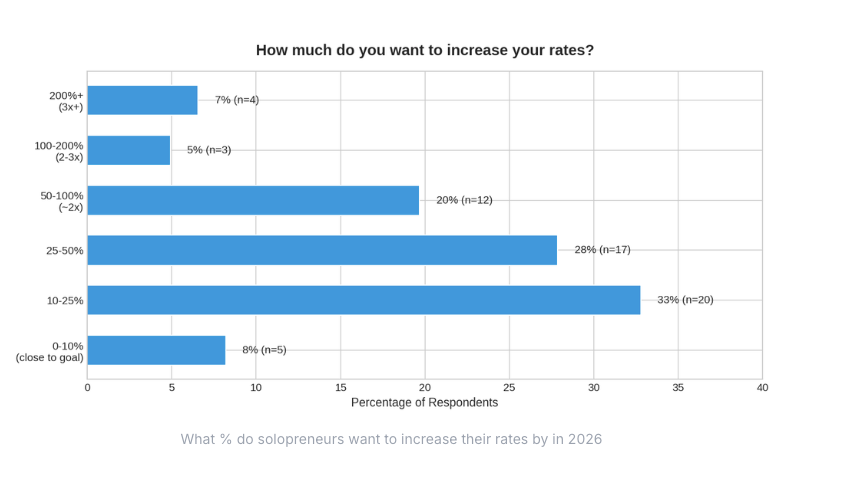
A 2025 survey of solopreneurs found that 87% don't fully trust their own rates — 49% believe they're underpricing, and another 38% aren't sure. But the real barrier isn't confidence in their own value. It's fear of inconsistent demand. That fear makes sense. But staying price-free to avoid it doesn't solve the demand problem. It just delays the moment when you have to face what the market actually thinks.
The sooner you have a number, the sooner that feedback starts coming in.

What Solopreneur Pricing Is Actually About
Most people approach their first price by asking: what am I worth? That's the wrong question. It turns pricing into self-assessment, which is both uncomfortable and irrelevant.
It's Not About What You Think You're Worth — It's About What Problem You're Solving
Your price is a signal about what problem you're positioning yourself to solve. A $200/session coach and a $2,000/session coach are not selling the same thing in the buyer's mind, even if the actual content is identical. The price communicates the category of problem, the type of client, and the level of commitment involved.
Before you set a number, the cleaner question is: what would a meaningful improvement in this area be worth to the person I'm trying to help?
The Difference Between Hourly, Project, and Value-Based Pricing
This matters early because the model you choose shapes how clients think about the relationship — and how you think about your own work.
Hourly is simple to calculate and easy to explain. It's also a trap if you're selling expertise rather than labor. Clients start optimizing for hours instead of outcomes.
Project-based is cleaner. You agree on a deliverable, name a price. According to QuickBooks' pricing strategy guide, project-based pricing lets you earn more for your efficiency — meaning the better you get at your work, the more you make per hour without renegotiating anything.
Value-based is the hardest to set up but the most defensible long-term. The price reflects what the outcome is worth to the client's business, not what it costs you to produce. This requires a real conversation about the client's situation — which, interestingly, is also how you learn whether they're the right client.
My take: start with project-based if you're unsure. It forces you to define scope, which forces you to define what you're actually selling.
How to Set Your First Price When You Have No Data
You don't have historical close rates, no comp data, maybe no testimonials. Here's a starting framework that works as an anchor.
The "10x Value" Rule as a Starting Anchor
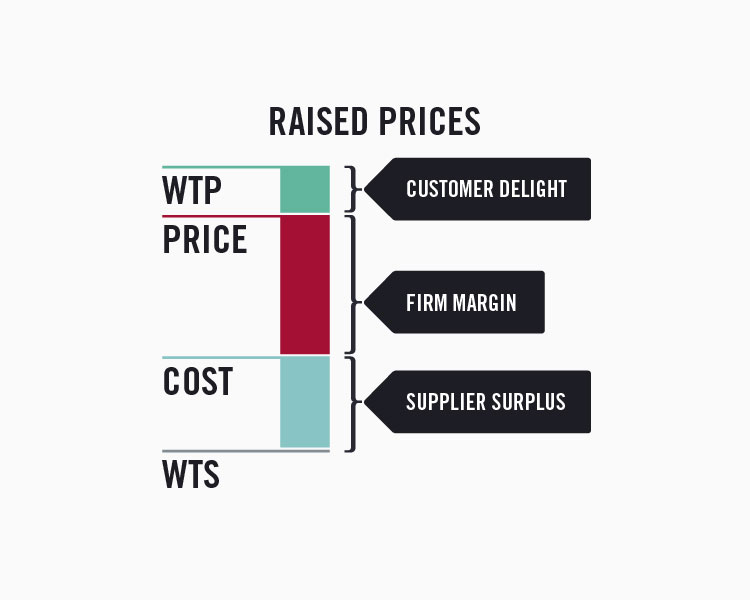
Ask yourself: if this works well, what's the concrete improvement for the client? Then price at roughly 1/10th of that value. If your work saves someone $50,000 in annual software spend, a $5,000 engagement isn't overpriced — it's rational. If you help a creator double their email list, and that list generates $2,000/year in revenue for them, then $200 is the floor, not the ceiling.
This isn't a formula you run mechanically. It's a sanity check. It stops you from anchoring your price to your hours or your discomfort, and starts anchoring it to what the client is actually getting.
Why Starting Too Low Is Riskier Than Starting Too High
I've heard the opposite more times than I can count: just start low and raise prices later. The problem is, it's harder than it sounds. Once you've set an expectation, changing it costs relationship capital. Early clients become anchors. Word-of-mouth travels at your current price.
There's also a subtler issue: low prices attract clients optimizing for cost. Those clients are often the hardest to work with, quickest to push scope, and least likely to refer you to people with real budget. As freelancefin's 2025 rate-setting guide puts it, a rate that's too low signals inexperience or a lack of confidence — attracting bargain-hunting clients who are often the most difficult to work with.
Starting higher, even if it means fewer early clients, tends to produce better data: the people who say yes are showing you what kind of problem they believe you solve.
What Happens When You Get the Price Wrong
You will. That's not pessimism — it's just how this works.
Signals to Watch: Who Says Yes, Who Says No, and Why
If everyone says yes immediately with no negotiation, you're probably priced too low. That sounds like good news, but it's a signal you've left money on the table and may have attracted clients who will undervalue the work.
If everyone says no, dig into why before adjusting the price. "Too expensive" often means "I don't yet see the connection between what you're offering and what I'm trying to solve." That's a positioning problem as much as a pricing one.
The signal worth paying most attention to: who pushes back and what they say. A client who pushes back thoughtfully — "can you walk me through how you'd approach this?" — is telling you they're interested but need more framing.
How to Raise Prices Without Losing Momentum
The cleanest way: raise your price for new clients first, keep existing clients at their current rate, and be transparent if they ask. SystemX's guide to raising professional service rates makes a point worth noting: sustainable rate increases come from stronger demand signals and clearer positioning — not from overnight announcements of doubled rates.
Give yourself a few months of new-client pricing before making changes to existing relationships. One pattern that works well: announce the increase with lead time and a reason. "I'm raising rates on [date] because my capacity is limited and I want to prioritize longer engagements." That's not justification — it's positioning.
Pricing as a Signal — What Your Price Says About Your Positioning
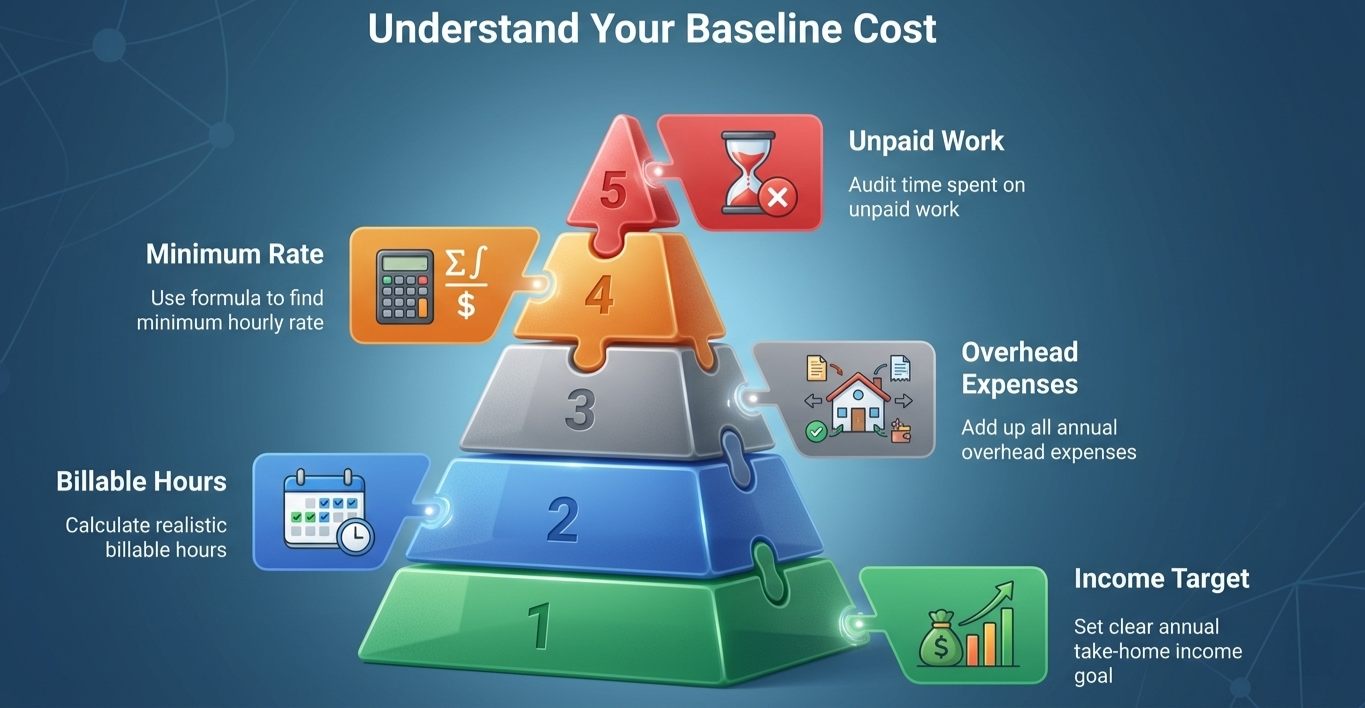
Your price isn't just about revenue. It communicates who you're for. A $500 project and a $5,000 project will attract different people, generate different conversations, and shape different expectations about what the engagement looks like.
Gusto's 2025 New Business Formation Survey found that 77% of solopreneurs reported profitability in their first year — but profitability and sustainability aren't the same thing. Plenty of people make money in year one at prices that trap them in year two. If your price is too low, you need more volume. More volume means less time per client, which means worse outcomes, which means weaker referrals, which means you're constantly refilling a leaky bucket.
Pricing higher, with fewer better-fit clients, is usually the more sustainable path. Not always — but more often than the "start accessible" advice suggests.
The Pricing Questions to Revisit Every Quarter
I keep a short list. These aren't tricks — they're honest check-ins.
Who said yes in the last three months, and what do they have in common? If you see a pattern, the market is telling you something about your positioning.
Who said no, and did any of them push back in a way that taught me something? Rejections with reasons are underrated data.
Have I taken on anything I resented for the price? If yes, that's a pricing signal, not a workload signal.
Is my schedule 70%+ full? If so, your rate probably has room to move.
These questions don't need to produce action every time. They just keep pricing from becoming a set-it-and-forget-it decision that quietly works against you.
Trade-offs: What You Give Up When You Optimize Only for Accessibility
Here's where I want to be honest about the other side, because this would be incomplete without it.
Free and low-priced work has legitimate uses. If you're in a genuinely new market and have zero signal on whether anyone wants what you're building, a small number of free engagements to test a hypothesis is reasonable. If you want access to a specific client for strategic reasons, a lower price might be the right call.
The trap isn't doing any of this. The trap is doing it by default, without deciding to. Free-by-accident and free-by-strategy are different things.
What you actually give up when you price only for accessibility: the kind of clients who value outcomes over cost. The data that comes from someone choosing you at a real number. The positioning signal that attracts future work at the level you want.
Worth reading on this: the State of Solopreneur Pricing 2026 report breaks down why most solopreneurs know they're undercharging but don't change it — and the answer is almost never "they lack confidence." It's a pipeline and leverage problem in disguise.
FAQ
Q: What if I genuinely have no experience? Shouldn't I charge less?
Less experience is a real factor, but it's not a reason to price at zero. It might mean your scope is smaller, not your price. A narrower, more defined offer at a real price teaches you more than unlimited free work.
Q: How do I know if my price is "too high" vs. the prospect just not being a good fit?
Probe the no. "Can you help me understand what's not working about the budget?" If they say "we just don't have it," that's fit. If they say "I'm not sure the value justifies it," that's a framing conversation worth having.
Q: Should I publish my prices publicly?
No strong rule here. Published pricing saves you from tire-kicker conversations. Private pricing gives you room to adjust based on scope. I'd lean toward publishing a starting price with "from $X" language — it sets a floor without locking you in.
Q: When is the right time to introduce a retainer?
When a client keeps coming back for the same type of work and both of you want the predictability. Retainers work best when the scope is clear enough that you won't feel like you're constantly overpromising.
Q: What if I want to offer a "founding member" discount to early clients?
That's fine — as long as you're making a deliberate choice, not defaulting to low. Name it explicitly, give it an end date, and make clear it won't be the ongoing rate. That framing actually helps early clients understand they're getting something special, rather than assuming your low price is just your price.
Okay, I think I've been sitting with this question long enough to say something useful. The core thing I keep coming back to: pricing is how you find out what your business actually is. Not a tagline, not a positioning statement — the price. The number tells you more about your market and your clients than almost anything else you'll do early on.
Start with something real. Watch what happens. Adjust from there.
That's my honest take.
Previous Posts:
Still figuring out your offer? Read how to get traction with your first users
If your AI tools feel inefficient, this explains why everything resets every session
Want to understand where AI agents fit into your business long-term?
Not sure whether to build systems or just use better tools? This breakdown helps
Get automation tips for your workflow
Weekly insights for non-technical professionals. No spam ever.