How to Scale a One-Person Business Without Hiring
Growing a one-person business doesn't have to mean building a team. Here's how solo operators actually scale — and when hiring is the wrong answer.
Hello, I'm Nova. I was reorganizing my workflow last month — for probably the third time this year — and realized something a little uncomfortable: I kept adding tools and tweaking systems, but what I actually needed to fix was something upstream. Not how I worked. But what I was building my work around.
If you're running a one-person business and feeling like you've hit a ceiling, I've been there. The instinct is usually "I need help" — meaning, hire someone. But I'd push back on that as a first move. Not because it's always wrong, but because it's often a solution to the wrong problem.
Why "Just Hire Someone" Is Often the Wrong First Move
Here's the thing about headcount: it doesn't just add capacity. It adds coordination. You now have someone to onboard, manage, review, and communicate with. For a solo operator, that overhead can eat more time than the help saves — at least in the early stages.
A small, tight-knit team can accomplish just as much as a bigger one, especially when you're smart about how you run things. The same logic applies at the individual level. The goal of scaling a one-person business isn't to grow headcount — it's to grow output without growing complexity.
That said, there is a point where help makes sense. I'll get to that. But most solo operators hit that question too early, before they've actually built the systems that would make delegation work in the first place.
What Scaling Actually Means for a One-Person Business
I've been thinking about this more carefully lately, and I think a lot of confusion comes from mixing up two things: scaling revenue and scaling yourself.
Scaling revenue means your income goes up. That can happen by raising prices, getting more clients, or selling something that doesn't require proportionally more of your time. All of these are valid.
Scaling yourself means adding more hours. Working weekends. Taking every call. That's not scaling — that's just grinding, and it has a hard ceiling. Your body will find it eventually.
Scaling means creating repeatable workflows, reducing constant custom work, building predictable income, and increasing capacity without burning yourself out. It's about designing a business that can grow without relying on nonstop hustle.
The practical difference shows up in how you spend Tuesday afternoon. Are you doing something for the first time, improvising, figuring it out? Or are you running a process you've already built and refined? The second version scales. The first doesn't.
The Three Levers Solo Operators Actually Control
After a lot of trial and error — and honestly, after simplifying my setup more than once — here's how I think about it now. There are three levers that matter.
Lever 1 — Reusable Execution: Turning Repeated Work Into Systems
The first time you do anything, it takes a while. The fifth time, it should be faster. The tenth time, it should basically run itself.
Systematic knowledge capture turns what one person knows into something repeatable. This stops you from solving the same problems over and over, letting you scale without adding headcount.
I started doing this with my research and writing workflow. Every time I built a new process — for interviewing, for outlining, for editing — I wrote it down, not as a manifesto, but as a checklist I'd actually use. The goal wasn't documentation for its own sake. It was reducing the number of decisions I had to make from scratch each time.
The friction of solo work isn't usually the work itself. It's re-deciding how to do the work every single time. That's what systems eliminate.
Lever 2 — Offer Design: Packaging Work So It Doesn't Scale Linearly With Time
This one shifted how I think about pricing and service delivery entirely.
If every project is custom — different scope, different deliverables, different timeline — then every project also requires fresh energy to scope, price, and deliver. That's exhausting, and it doesn't scale.
The alternative is what people in the solopreneur space call "productized services." A productized service is a scoped, standardized solution you offer for a set rate to a well-defined target audience. Instead of tailoring your service to each client, you bundle your expertise into a repeatable step-by-step framework with a fixed price tag on it.
A good real-world example: designer Brett Williams built DesignJoy around a subscription model — clients pay a flat monthly rate for async design work. No custom proposals, no scope creep negotiations, no unpredictable delivery timelines. He reportedly handles 16+ clients while working roughly 6 hours a day. I can't verify his exact numbers, but the structure of what he built is legit — and it's replicable in a lot of service categories.
The core insight is this: when your offer has a fixed shape, delivery gets faster every time. You're not reinventing the wheel per client. You're running a process.
Lever 3 — Context Continuity: Not Starting From Zero on Every Project
This is the one I think about most right now.
Every time you start a new project or onboard a new client, there's a ramp-up period where you're figuring out context: what matters to them, how they communicate, what they've already tried. That time is essentially invisible cost.
The solo operators who scale well find ways to make context portable. Templates that carry forward. Notes that actually get used next time. Systems that remember what you've learned, so you don't have to.
This is also where tools can genuinely help — not by doing your thinking for you, but by reducing the re-entry cost on work you've already done.
Where AI Fits Into This Picture
Okay, so here's where AI actually belongs in this conversation — and I want to be honest about what it can and can't do.
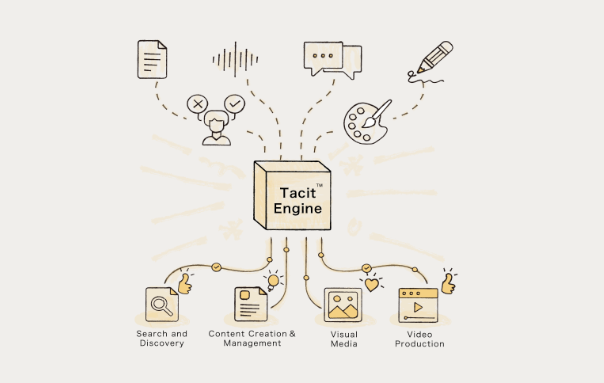
AI is genuinely useful for Lever 1 (execution systems) and parts of Lever 3 (context continuity). It can draft, summarize, research, and generate structure faster than I can. Where it doesn't replace me is in judgment calls: what angle to take on a piece, whether a client relationship is worth pursuing, how to position something.
The "build vs. use" question matters here. Most solo operators are better off using existing tools than building custom ones. The time cost of setup is real. I've spent hours configuring tools I used twice.
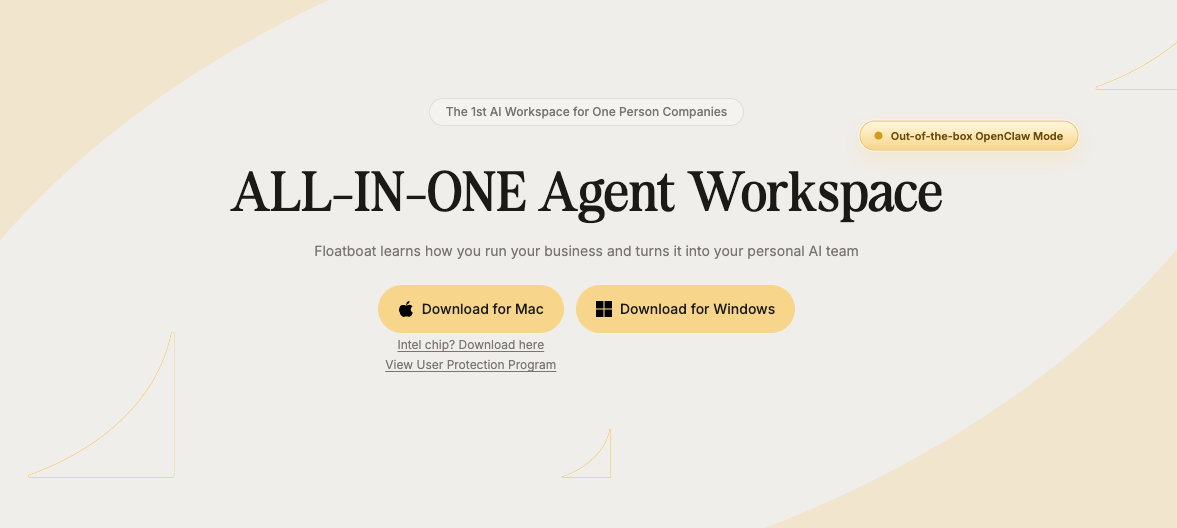
One category I've been watching is AI workspaces — tools designed to handle multiple tasks in a single environment rather than requiring you to context-switch between five different apps. The promise is that you spend less time managing your tool stack and more time doing actual work. Floatboat is one example in this space, positioning itself as an AI workspace for solo operators who want document reading, research, and content editing in one place. I haven't done a deep dive on it yet — worth checking their official site if the category is interesting to you — but the underlying idea of reducing tool-switching overhead is real.
The honest version of what AI does for a one-person business: it compresses the time it takes to run Lever 1 systems. It doesn't replace the need to build them.
The Signs You Actually Do Need Help (And What Kind)
There's a version of "scaling without hiring" that becomes self-deception. If you're consistently underwater, dropping balls, and the issue isn't systems but pure capacity, hiring makes sense.
The tell is usually this: you have more demand than your best-optimized process can handle. Not more demand than your current, messy process — but more than a clean, efficient one.
If you're not sure which category you're in, try building the system first. Genuinely streamline the workflow. Then see if you're still overloaded. If yes, you've earned the hire.
And when you do bring someone in, the system you built makes onboarding dramatically easier. You're not handing over a mess — you're handing over a process.
A Realistic Ceiling — And How to Know When You've Hit It
Every one-person business has a ceiling. It varies a lot depending on what you're selling and how you've structured it, but it exists.
The full-time independent workforce in the U.S. doubled to 27.6 million between 2020 and 2024. Within that group, more are earning $100K+ annually — a 19% year-over-year increase. But getting to that level, and beyond it, usually requires being honest about what kind of business you're building. A high-touch consulting practice has a different ceiling than a productized service or a content business with digital products. Neither is better — they're just different shapes.
The ceiling question isn't "how hard am I working" — it's "does my current structure allow for more output without proportionally more time?" If yes, you have room to scale. If no, something about the structure needs to change before you add people to it.
According to the Harvard Business Review's work on personal productivity, most knowledge workers overestimate how much of their time is genuinely irreplaceable. A lot of what feels like "only I can do this" is actually habit, not necessity.
That's not comfortable to hear, but it's been useful for me.

FAQ
Q: I'm already using a lot of tools. Do I need to add more?
Probably not. The problem for most solo operators isn't a lack of tools — it's that their existing stack has too much overlap and requires too much manual handoff between apps. Before adding something new, check whether what you already have can do the job if you configured it properly.
Q: How do I know if my offer is "scalable"?
Ask yourself: if I got three more clients tomorrow exactly like my current ones, could I deliver without working significantly more hours? If no, your offer probably needs more structure. A productized service approach — standardized scope, fixed price, repeatable delivery — reduces scope creep and makes workload predictable. That's the starting point for real scalability.
Q: What about contractors vs. Full-time hires?
Contractors first, almost always. You preserve flexibility, you don't take on fixed cost during slow periods, and you get to test whether the role is actually needed before committing. Platforms like Upwork have made it relatively straightforward to find specialists for specific, bounded projects.
Q: Is there a "right" time to hire?
There's a useful framing I keep coming back to from Entrepreneur: hire when a genuine need arises, not based on projections alone. The pressure to "look like" a growing company by adding headcount is real, but it's mostly vanity. Hire for constraint relief, not for appearances.
Anyway. That's where I am with this.
I'll probably keep revisiting the ceiling question as my own setup evolves — I don't think I've figured it all out. But the frame of "three levers before headcount" has been more useful than anything else I've tried.
If your situation looks anything like mine, it's probably worth sitting with for a bit before jumping to hire.
Previous Posts:
Learn how to build a simple, effective AI workflow as a solo founder
Understand the difference between AI workspaces vs workflow builders
See why AI forgets between sessions — and how it slows you down
Explore how one-person businesses can operate like a team with AI
Discover practical AI agent use cases for real workflows
Get automation tips for your workflow
Weekly insights for non-technical professionals. No spam ever.