
OpenAI GPT-6: Why Solo Companies Should Prepare Now
GPT-6 is coming. Before it drops, here's what solo operators should have in place to actually benefit from the next leap in AI capability.141 chars

Hi, I'm Nova. I've been half-watching the GPT-6 rumor cycle for a few months now, mostly because I keep getting the same question from friends who run one-person operations: should I be doing something to get ready?
Honest answer: probably yes, but not what you'd think. The thing to prepare isn't "a GPT-6 strategy." It's the boring scaffolding underneath your work — the stuff that determines whether a better model actually makes you faster or just gives you more ways to procrastinate. I've been wrong about this before, so let me walk through what I've pieced together.
What We Know About GPT-6 So Far
Confirmed signals vs speculation
Let me sort this out, because the noise-to-signal ratio is rough right now.
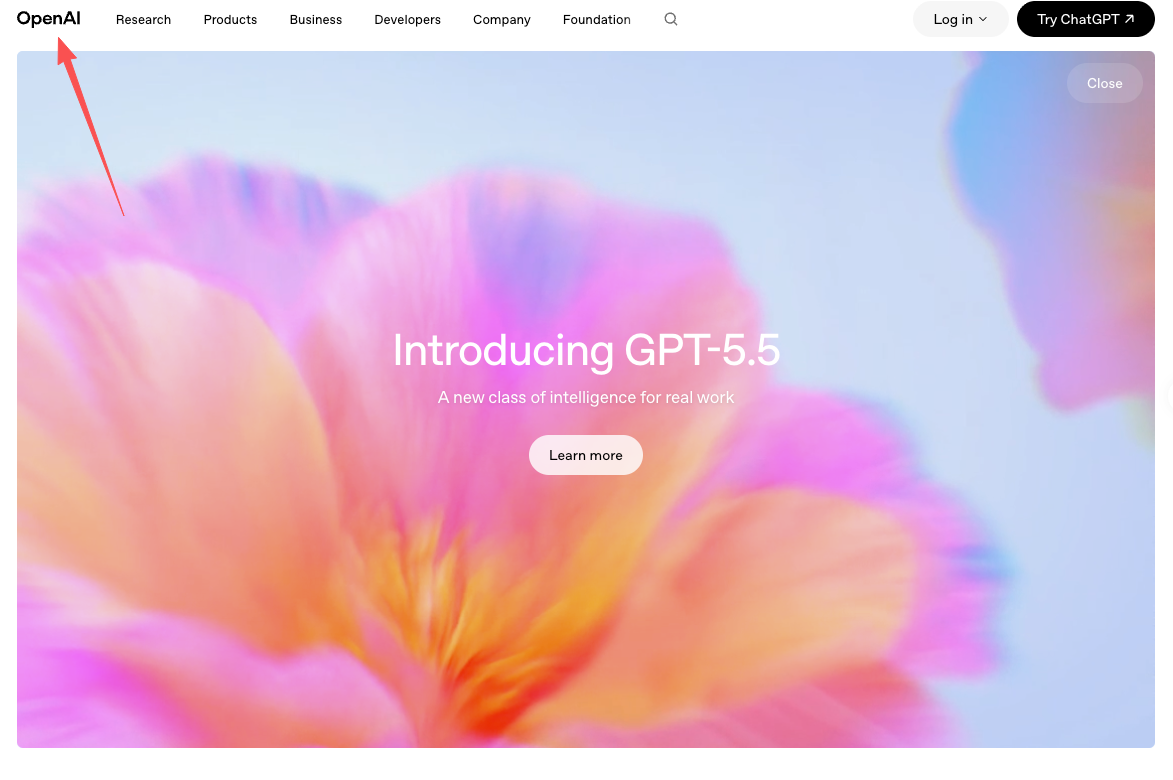
What's confirmed. Pretraining for OpenAI's next frontier model — internally codenamed "Spud" — finished on March 24, 2026, at the Stargate data center in Abilene, Texas. Sam Altman said publicly that launch was "a few weeks" away. That's it. No model card. No API announcement. No blog post on OpenAI's site naming GPT-6 specifically. As I'm writing this in late April, we're about four and a half weeks past that "few weeks" comment and the flagship is still in safety evaluation.
What's speculation. Everything else. The 2M-token context window rumor. The 40% performance gain over GPT-5.4. The April 14 launch date came and went without a peep. Polymarket traders who had "by June 30" sitting near 93% cut it to roughly 45% in a single week. That's not the market being confused — that's the market saying a multi-month slip is now plausible.
What Altman has said publicly is more useful than the leaks, actually. He's talked about memory as the feature he's most excited about — ChatGPT that remembers your preferences, routines, ongoing projects across weeks. He talked about "agentic" workflows. He talked about personalization. That's the direction, not a spec sheet.
I'd treat any article giving you GPT-6 benchmarks right now as fan fiction.
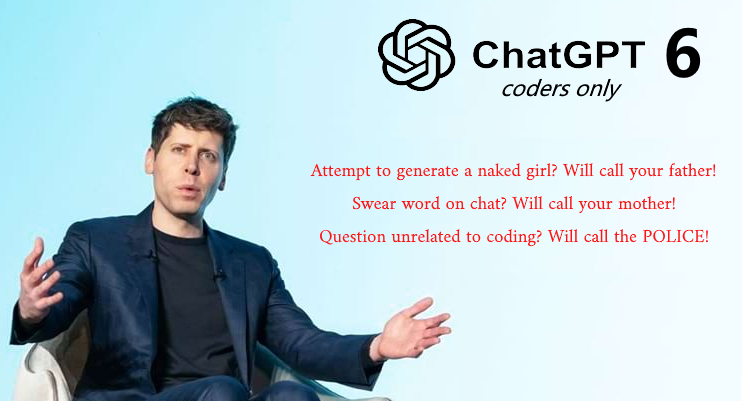
Timeline estimates from public sources
My best guess, stitched together from what's out there: late Q2 or Q3 2026. That lines up with Altman's "a few weeks" (generous interpretation), standard safety evaluation cycles of 4–6 weeks, and the competitive pressure from Anthropic's Opus 4.7 dropping on April 16 and other Q2 releases.
Could be earlier. Could be later. I could be wrong here. Bookmark the OpenAI release notes and stop refreshing Twitter.
GPT-4 to GPT-5: What Each Leap Changed
Here's where history actually helps.
New capabilities vs actual workflow change
GPT-4 shipped in March 2023. GPT-5 shipped August 7, 2025. That's a 29-month gap — and according to OpenAI's official launch page, GPT-5 was "a significant leap" with state-of-the-art scores: 94.6% on AIME 2025, 74.9% on SWE-bench Verified, 84.2% on MMMU. Hallucinations are down ~45% versus GPT-4o with search enabled.
Reading that, you'd expect solo operators to feel a 29-month-of-progress-compressed-into-one-day kind of shift.
That is not what happened.
I remember the rollout week clearly. Altman himself later admitted the launch was "totally screwed up" — the model was technically more capable but felt colder and less personal than GPT-4o, and users rebelled hard enough that OpenAI had to bring 4o back as an option. Most of my friends who use ChatGPT daily spent a week comparing outputs, shrugging, and going back to their original prompts with minor tweaks.
The workflow change for solo operators was real but small. Better code. Fewer hallucinations on factual work. Longer sustained reasoning chains. Nobody's daily rhythm got rewired.
Why more power doesn't automatically mean more output
This is the part I want to sit with, because I was wrong about it for a long time.
I used to think that when a better model dropped, people with good prompts would immediately move faster. The logic seemed airtight: same input, smarter engine, better output. What I missed is that the bottleneck for most solo operators isn't model capability. It's the messy part around the model — figuring out what you actually want, feeding it the right context, reviewing what it gives back, deciding what to ship.
A better model makes Step 3 faster. Steps 1, 2, 4, and 5 stay exactly as slow as they were.
I've tried to reconstruct my own GPT-4-to-GPT-5 transition and be honest about speedup. Maybe 15% on tasks where I already had a dialed workflow. Zero to negative on tasks where I didn't — because now I was tweaking prompts again, running comparisons, second-guessing outputs that were probably fine.
More Power, Same Bottleneck
The pattern that repeats with every major model release
Watching this a few cycles now, the shape is predictable:
Week one: everyone benchmarks the new model against their favorite pet task and tweets the results. Week two: people who built their workflow around old quirks discover new quirks they haven't worked around yet. Week three: the people who had good systems get a quiet speed boost. The people who didn't have systems spend the month migrating prompts and feeling productive without actually shipping more.
I've done every version of this. The most embarrassing one was around GPT-4.5 — I spent most of a week rebuilding prompts that were working fine, chasing maybe 5% improvement, while the project they were feeding into got zero new output. That failure was actually useful information.
The pattern: the tools that compound are the ones you use to produce, not the ones you use to configure your tools.
What to Build Before GPT-6 Arrives
Okay, here's the part I actually care about. If you run a one-person operation and GPT-6 drops tomorrow — or in three months — what should already exist on your side?
Standardize your repeatable work now
The work that benefits most from better models is repeatable work with clear inputs and outputs. Research briefs. First-draft outlines. Code reviews. Customer email drafts. Weekly summaries.
If this work lives in your head or in scattered prompts, a better model will give you scattered better outputs. If it lives as documented workflows with clear inputs — here's the source material, here's the audience, here's the format, here's a good example — you can swap in a better model and get a genuine speedup on day one.
I've been slowly moving my own repeatable stuff into a simple doc per workflow. Not fancy. Input format, prompt, example good output, example bad output. It takes an hour per workflow and pays back the first time I run it with a new model.
Build context systems that transfer to any model
This is the bigger one, and it's where Altman's comments about memory actually matter.
GPT-6 is pointing toward persistent, personalized assistance — models that know your work, your projects, your writing voice. But here's the thing: that only works if you have a clear answer to "what is my work, my projects, my writing voice."
Most solo operators don't. Their context is scattered across Google Docs, Notion, Slack, email, random text files. When a model offers to "remember who you are," it can only remember what you hand it.
The work worth doing now:
Write a one-page document describing what you do, who you serve, what you're currently working on, and how you like to communicate. This is the pre-context for any assistant, current or future. The GPT-5 developers page shows how structured instructions meaningfully improve output — and that's true whether the model is GPT-5, GPT-6, Claude, or whatever ships next.
Keep a running file of your best outputs per work type — the emails you were proud of, the briefs that landed, the code you'd write again. This becomes your style reference for any model.
Document the decisions you make repeatedly and why. Not "how to write a landing page" but "what I consider a good landing page and why."
None of this requires GPT-6. All of it makes GPT-6 (or Claude, or whatever) immediately useful the day it ships.
The thing I wish I'd done two years ago, before GPT-4 even: spent the weekend writing down the questions I already knew the answers to. Every assistant has been easier to work with since I started doing that.
FAQ
When is GPT-6 launching?
No official date as of late April 2026. OpenAI finished pretraining on March 24. Altman said "a few weeks." Best guess: late Q2 or Q3 2026. Watch OpenAI's official announcements, not Twitter.
Will GPT-6 be a bigger leap than GPT-4→5?
I don't know, and neither does anyone writing about it. GPT-4→5 was 29 months and landed as a meaningful-but-not-dramatic upgrade for most workflows. The Wikipedia entry on GPT-5 captures the mixed reception well. GPT-6 is coming faster (Altman said shorter gap), which could mean smaller delta per release. Could also mean the opposite. We'll see.
Should solo operators wait to build anything until GPT-6 ships?
No. The work that makes GPT-6 useful — documented workflows, personal context, style references — is exactly the same work that makes your current model more useful. It compounds.
What about the 2M context window rumors?
Unverified. Treat it as fan fiction until OpenAI publishes a model card.
Anyway — that's where I am on this right now. I'll update when the model actually ships.
Previous Posts:
→ See why most AI workflows break without structure (and how to fix it before GPT-6)
→ Understand what persistent AI agents are and why memory will matter more than model upgrades
→ Learn how AI actually fits into solo operator workflows in 2026 (beyond the hype)
→ Explore how to build systems that scale your one-person business without hiring
→ Break down why AI “forgets” every session — and what to do about it now
Get automation tips for your workflow
Weekly insights for non-technical professionals. No spam ever.