
Meta Muse Spark vs GPT-5.4: How New AI Models Impact Solo Businesses
Meta Muse Spark is being called a Llama 4 replacement. Here's what solo operators need to know before switching models again.125 chars
Hi, I'm Nova. A friend messaged me last Wednesday: "Have you seen Muse Spark? I'm on GPT-5.4 right now — should I switch?"
I stared at the message for a minute. That was the third time this month someone had asked me a version of this question. Every time a new model drops, the people I know who run one-person businesses go through the same loop — should I switch, do I need to rebuild my workflow, am I missing out.
I've been there. But honestly, my answer now is different from what it would have been six months ago.
What Is Meta Muse Spark
Muse Spark is Meta's first model release since the company restructured its AI division in mid-2025. It came out on April 8, 2026 — the first product from Meta Superintelligence Labs, the unit Alexandr Wang took over after Meta acquired a stake in Scale AI.
If you've been following the AI space, you'll remember Llama 4 didn't land well in April 2025 — there were credible accusations that benchmark results had been juiced using unreleased model variants. Meta spent the following nine months rebuilding the entire stack from the ground up.
I've been using it for about a week. The first thing I noticed: it's not trying to be the smartest model. It's trying to be efficient — fast, capable enough, integrated into Meta's product ecosystem. Meta says as much in their official launch post, where they openly acknowledge gaps in long-horizon agentic work and coding.

How It Relates to Llama 4
This part trips people up, so let me say it clearly.
Llama 4 was open-weights — you could download it and run it yourself. Muse Spark is closed. Right now it's only accessible through meta.ai and the Meta AI app, with API access limited to selected partners. Meta says they "hope" to open-source future Muse models, but no timeline.
On the technical side, Meta claims Muse Spark matches Llama 4 Maverick's capabilities using over 10x less compute. That's Meta's claim, not yet independently verified. I'm filing it under "interesting, watching for confirmation."
What Meta Is Positioning It Against
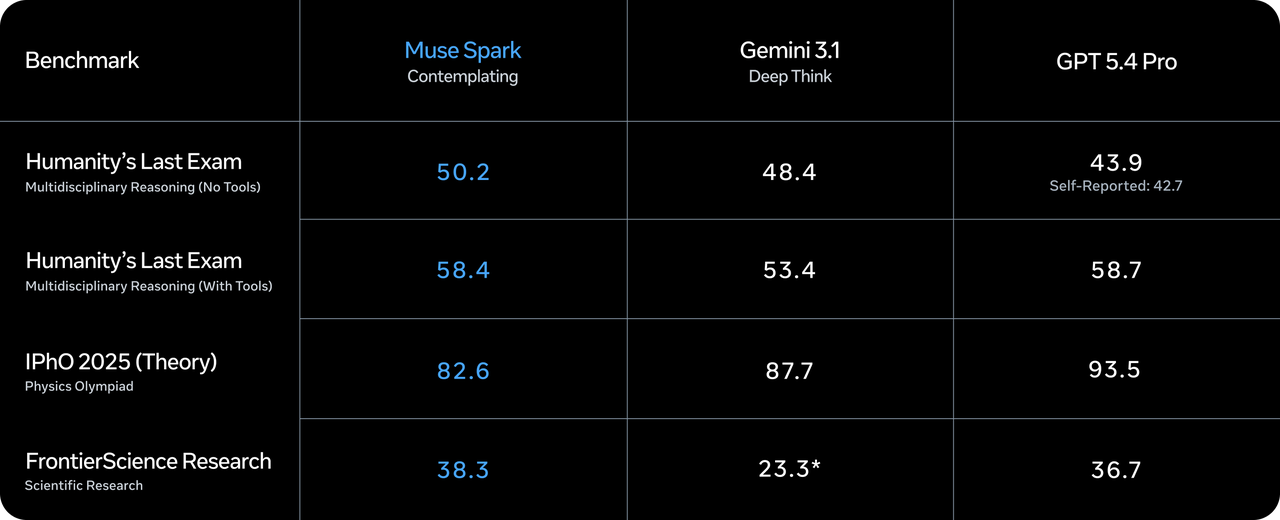
Wait — this part is actually interesting. Meta isn't pitching Muse Spark as a frontier-beating model. In their own benchmark charts, Muse Spark trails GPT-5.4 and Claude Opus 4.6 on a lot of tests. The framing is more like "we've rebuilt the foundation, expect bigger models soon."
That kind of honesty actually made me trust the launch more. Especially given the Llama 4 history.
Meta Muse Spark vs GPT-5.4: Benchmark Comparison
I sat down with the public numbers from both sides. Here's what stood out.
Where Muse Spark Leads
On HealthBench Hard, Muse Spark scores 42.8% versus GPT-5.4's 40.1%. Not a huge gap, but Meta worked with over 1,000 physicians to curate health training data, so this is one of their explicit focus areas.
It also leads slightly on DeepSearchQA. The Contemplating mode — where multiple agents reason in parallel — performed reasonably well on the kind of branching research questions I throw at it.
I tested it on a real task: analyzing a 30-page product research PDF. Asked for a structured breakdown. I got up to grab coffee, came back, it was done. I read through it twice, didn't find obvious factual errors. That part was nice.
Where It Still Falls Short
But the moment tasks get longer or more agentic, the gap shows.
On Terminal-Bench Hard, Muse Spark trails both GPT-5.4 and Claude Sonnet 4.6. On GDPval-AA — the benchmark for real-world work tasks — it scores 1,427 ELO compared to Claude Sonnet 4.6's 1,648. That's not a small gap.
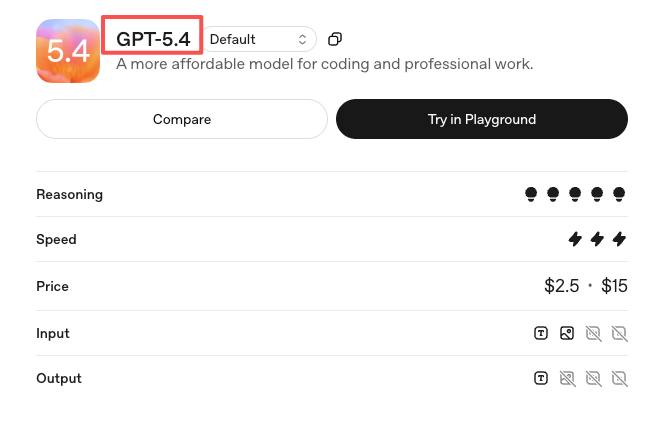
OpenAI's launch announcement makes a separate point worth flagging: GPT-5.4 hits 75% on OSWorld-Verified (computer-use benchmark), up from GPT-5.2's 47.3%. That's a generational jump for computer-use specifically. When I tested cross-app workflows — letting the model move between browser, spreadsheet, and document — GPT-5.4 was visibly more reliable end-to-end.
One more thing: GPT-5.4's individual claims are 33% less likely to be factually wrong than GPT-5.2. I can't independently verify that number, but in daily use I do notice fewer hallucinations.
Does a Better Model Change How a One-Person Business Operates?
Here's the question I actually want to talk about.
When you run your own thing, you face a specific cost-benefit calculation: should I switch? Will I need to rebuild my prompts and workflows? Will the time saved actually exceed the switching cost?
When GPT-5.4 came out, I did something kind of dumb. I spent a whole weekend rewriting my prompt templates, my workflow docs, my automation scripts — all of it. After two weeks of using the new setup, three things became clear:
First, the new model was meaningfully better. Outputs I used to double-check, I could now trust on first pass for some tasks. Second, the time I saved was less than I'd expected. Maybe ten to twenty minutes a day, on a good day. Third, the time I'd spent rewriting everything? Roughly two months to break even.
Not a bad weekend. Just not the productivity win it felt like.
The Real Productivity Driver Behind Model Upgrades
I've thought about this a lot since. My current take: for a one-person business, the marginal gain from a model upgrade is much smaller than the gain from refining your workflow itself.
TechCrunch's Muse Spark coverage quoted Zuckerberg saying Meta wants to build "agents that do things for you." That sounds like marketing copy, but it actually points at the real problem: what changes your output isn't the model getting smarter — it's whether you've connected it to the specific work you actually do.
Right now I use GPT-5.4 for client research, first-draft outlines, and fact-checking. Not because GPT-5.4 is magic — but because I've spent time integrating it into the parts of my day where it adds clear value. If I switched to Muse Spark, the first two tasks would be roughly the same. The third would get worse, because GPT-5.4 has the edge on factual accuracy.
The model didn't make me productive. The integration did.
The Model-Switching Trap
Okay, let me give you an actual answer here.
If you're running a solo business and you find yourself thinking about switching every time a new model drops — that pattern itself might be the problem.
Why Switching Models Rarely Solves the Real Problem
I've watched myself and a few other solo founders do this. The anxiety to switch usually isn't because the current model isn't good enough. It's because there's friction somewhere in the workflow that we haven't named.
Switching gives you the feeling of "I'm doing something." But the underlying friction stays. Next model release, the cycle starts again.
What Actually Changes When You Upgrade
Fortune's reporting on Muse Spark made a point I think is worth keeping in mind: Muse Spark wasn't designed to beat the frontier. It was designed to be efficient and slot into Meta's product ecosystem.
That framing actually applies to individuals too. The right question isn't "which model is most powerful." It's "which model fits my existing toolchain and habits."
The Batch's analysis puts it well — Muse Spark's strengths cluster in data-quality-sensitive tasks, while its weaknesses cluster in areas where architecture and RL scaling matter more. Translation: it's not a comprehensive upgrade. It's a tool that's better in specific scenarios.
If your work is mostly multimodal processing, health-related research, or lightweight investigation — Muse Spark is worth a test. If you're doing long-chain agentic work, deep coding, or computer-use automation — GPT-5.4 is still the steadier choice. OpenAI's API docs explicitly position it for "complex professional work," and that matches what I see in practice.
FAQ About Meta Muse Spark
Is Meta Muse Spark Better Than GPT-5.4?
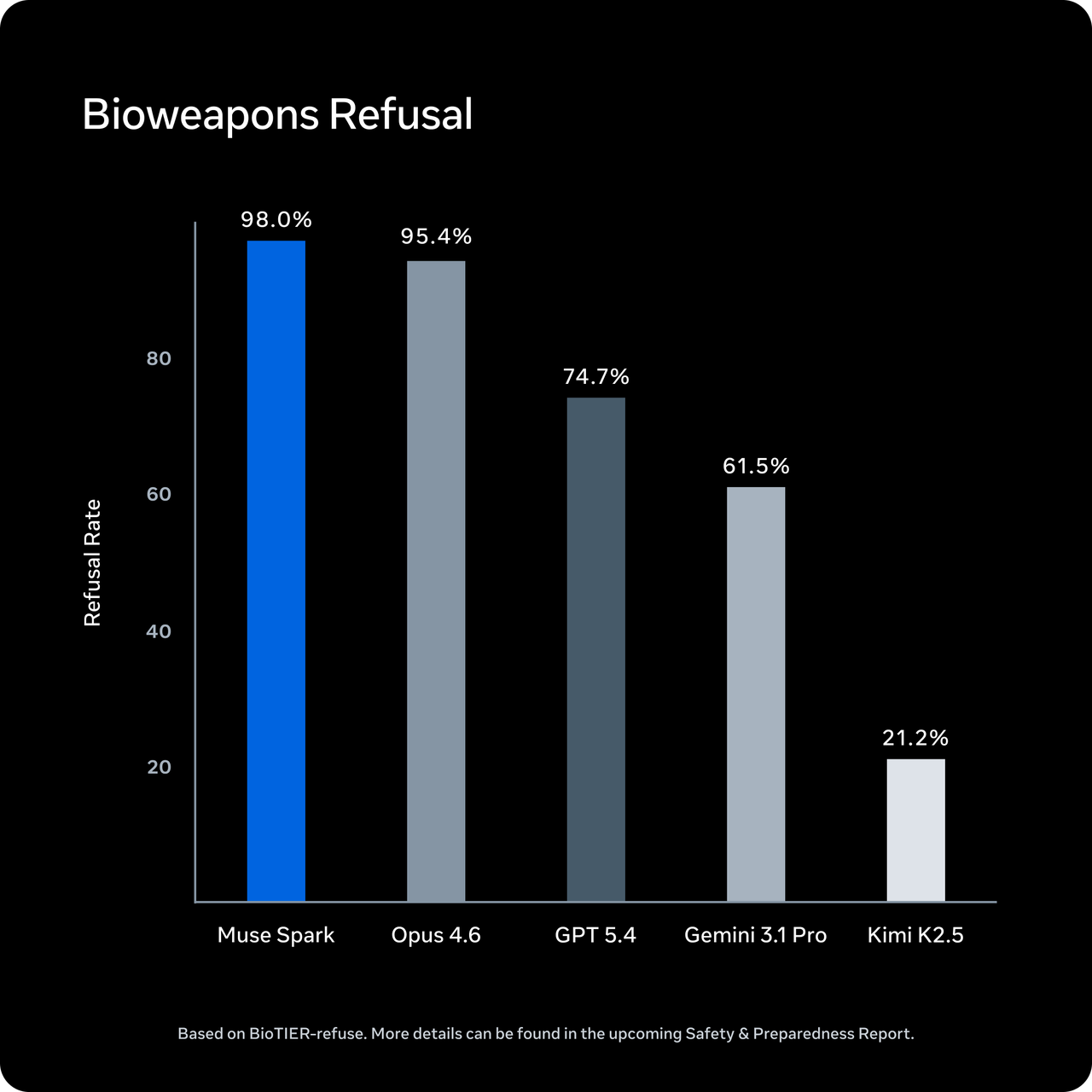
It depends on what you're doing. Overall, Muse Spark scores 52 on the Artificial Analysis Intelligence Index versus GPT-5.4's 57. But Muse Spark leads on health and multimodal tasks, while GPT-5.4 is clearly stronger on coding, computer-use, and long-horizon agentic work.
This is from about a week of hands-on use. One data point. Your mileage may vary.
Should Solo Founders Switch Models?
I'll just say it: short-term, you probably don't need to switch.
Unless your current model has a specific, recurring pain point in your work, the switching cost — rewriting workflows, debugging outputs, relearning quirks — will usually exceed the time saved.
If you want to try Muse Spark, keep your current setup as the main driver and run it on one specific category of task for two weeks. Compare outputs. Then decide if it's worth expanding.
What Matters More Than Model Choice?
The interface between your workflow and the model.
I know people who get more out of GPT-3.5 than others get out of GPT-5.4 — because they've thought clearly about what to delegate, what to do themselves, and where to use scripts as fallback.
I know other people on the latest model who haven't seen efficiency gains — because they treat every conversation like a fresh chat and re-describe their task from scratch every time.
The models keep shifting. What actually determines your output is how you use them.
That's my honest take, with all the caveats. A month or two from now, GPT-5.5 or the next Muse generation will be out, and the comparison will look different. But for solo operators, "wait a beat before switching" tends to age better than "switch immediately."
Sometimes the most useful move when a new tool drops is to do nothing for two weeks — and watch what the people actually using it day-to-day end up saying.
Previous Posts:
Get automation tips for your workflow
Weekly insights for non-technical professionals. No spam ever.