
Best Manus AI Alternatives in 2026
Looking for Manus AI alternatives? Here are the tools worth considering in 2026 — compared by use case, not just feature lists.
See you again, Nova is coming~ A few weeks ago I was trying to automate a research-to-draft workflow for a project. Someone in Discord I keep mentioning Manus AI. So I went to check it out — and immediately ran into the invite queue. Again.
Wait… still invite-only?
That's when I started actually digging into what else was out there. Turns out the manus alternatives space has gotten really interesting in 2026. Some tools do specific things better than Manus. Some are just more accessible. And a few surprised me. Here's what I found.
What to Look for in a Manus AI Alternative
Before jumping into tools, I made myself answer a few quick questions. Because "alternative" means different things depending on why you're looking.
Key things worth evaluating:
Task scope — Do you need full autonomous multi-step execution, or just smart assistance on focused tasks?
Context handling — How much background can the tool hold across a long session?
Ease of use — Is it no-code friendly, or do you need to configure things?
Pricing — Credit-based, subscription, or free tier that actually works?
Manus is powerful for research-then-build workflows, especially for solo users. But its credit system, access restrictions, and cost make it hard to rely on day-to-day. That gap is where these alternatives live.
Best Alternatives for General AI Agent Work
Floatboat
(Updated on Aug. 23, 2026)
Full disclosure: this is us. We built Floatboat, so take this with a grain of bias — but also with insider knowledge of what it actually does and why.
Floatboat is an all-in-one AI agent workspace — a desktop app (Mac + Windows) designed for solo operators and small teams who are doing the job of five people. The core idea: instead of switching between a chat AI, a file manager, a browser, a workflow tool, and an automation platform, you get one environment where an AI agent lives alongside everything you work with.
What makes it different from the chat-based tools on this list:
It's a workspace, not a chat window. Files, browser, preview, and agent sit side by side. You can drag a webpage into a folder as Markdown, drag a local PDF into the chat, or have the agent read and write your files directly — no uploading, no copy-paste.
Persistent memory that actually works. Floatboat learns how you operate — your preferences, your judgment calls, your workflows — and carries that context across sessions. You don't re-explain yourself every Monday morning.
Combo Skills — reusable execution, not prompts. These are packaged skills the agent can run: turn a voice memo into a client proposal deck, review a contract and flag negotiation leverage, convert raw research into publish-ready content. One-click, no prompt engineering required. There's a Combo Store with ready-made skills, or you can build your own from chat history.
Every frontier model, zero config. GPT, Claude, Gemini, DeepSeek, Kimi, MiniMax, GLM — all built in. No API keys, no VPN, no separate subscriptions. Auto Mode routes cheap models for simple parsing and frontier models for hard reasoning, and falls back automatically if one provider hits rate limits.
3,500+ integrations via MCP. Notion, Slack, GitHub, Linear, Google Drive, Gmail, Figma, plus your local Word/Excel/PPT files. Agents call real APIs in place with scoped permissions.
Built-in browser automation. The agent can browse pages, extract information, and automate actions on web services — ChatGPT, Google, internal tools — without you switching tabs or repeating manual clicks.
Native OS integration. On both macOS and Windows, it writes directly to Reminders, sends email through your local mail client. It's not trapped inside a sandbox.
Strengths: True all-in-one workspace (not just chat), persistent cross-session memory, installable agent skills with no code required, every major model built in with zero setup, deep local file access, browser automation, 3,500+ tool integrations.
Limitations: Desktop-only for now — no mobile app. Newer to the market, so community content and third-party tutorials are still growing. The workspace paradigm takes a session or two to click if you're coming from pure chat interfaces.
Pricing: $1 to run your first real task. No credit system, no invite queue, no token metering anxiety.
Best for: Solo founders, freelancers, creators, and small teams (1–5 people) who are running an entire business solo and need an AI that actually does the work — not just answers questions about it. If you've been duct-taping ChatGPT + Notion + Zapier + five browser tabs together, this replaces that stack.
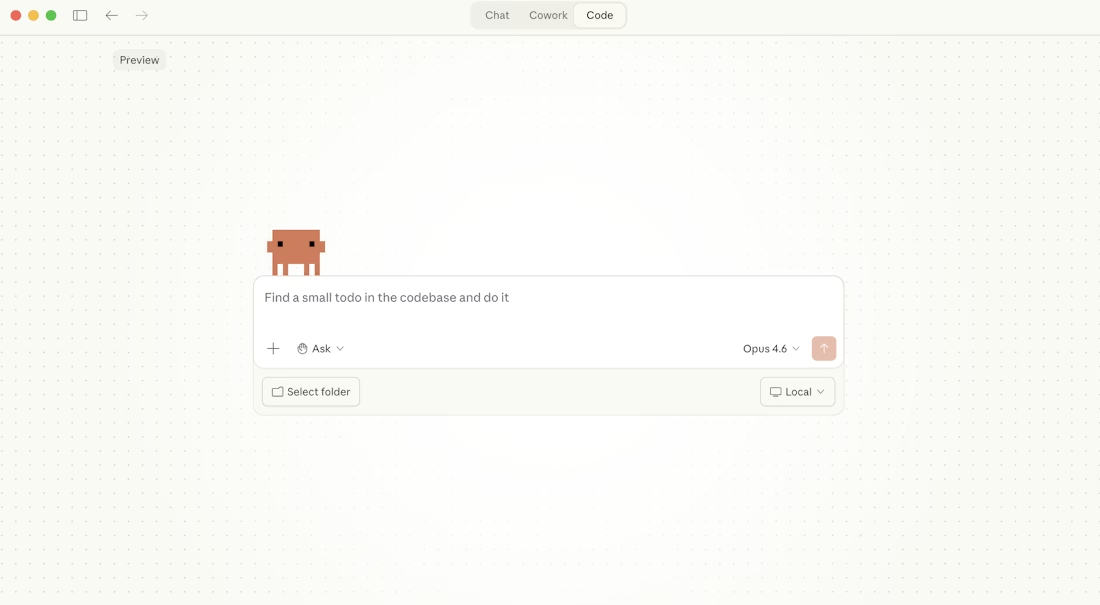
ChatGPT Agent (OpenAI)
This one is probably the most accessible Manus AI alternative right now. The agent mode inside ChatGPT — available on Plus ($20/month) and above — can browse the web, run code, handle files, and chain tasks together in a sandboxed environment. It's not as autonomous as Manus, but for most everyday workflows, it gets the job done without the waitlist drama.
Strengths: Huge ecosystem, familiar interface, solid reasoning with GPT-5.4.
Limitations: Around 400 agent runs/month on Plus before hitting caps; doesn't do deep parallel research the way Manus does.
Best for: People who want an agent they can actually use today, without setup friction.
You can check current plan details on the OpenAI ChatGPT pricing page — it gets updated frequently and the tier structure has shifted a bit in early 2026.
Claude (Anthropic)
I've been using Claude a lot lately for longer research tasks. It handles nuance better than most, and the 200K context window means I can dump a lot of background in without things falling apart midway through. It's not a full autonomous agent in the Manus sense, but for thinking-through-a-problem tasks, it's genuinely useful.
Strengths: Long context, thoughtful responses, less likely to hallucinate on complex topics.
Limitations: More assistant than autonomous agent — it won't go execute tasks independently.
Best for: Writers, researchers, anyone doing knowledge-heavy work who wants a thinking partner, not just a task runner.
Best Free or Lower-Cost Alternatives
AutoGPT (Open Source)
For the technically adventurous — and I say this as someone who spent an afternoon getting it running — AutoGPT is a genuinely capable open-source agent. You supply your own API key, so costs depend on usage, but there's no platform fee. It can browse the web, write and execute code, manage files, and chain tasks.
Strengths: Free to run (minus API costs), full control over behavior, no vendor lock-in.
Limitations: Requires technical setup; results can be inconsistent without careful prompting.
Best for: Developers who want to experiment or build custom agent workflows without paying a SaaS premium.
Perplexity AI
Okay, this one isn't an "agent" in the full Manus sense. But if what you're actually using Manus for is deep research, Perplexity does that part really well — and the free tier is surprisingly useful. It searches in real time, cites sources, and produces clean summaries fast.
Strengths: Real-time web search, cited sources, clean output. Free tier available.
Limitations: Not an execution agent — it won't take actions or automate tasks.
Best for: Research-first workflows where you need good, current information quickly.
Best Alternatives for Workflow Automation
Lindy.ai
This is the one that surprised me most. Lindy is built specifically for automating business workflows — email triage, calendar management, CRM updates, follow-ups. It's no-code, has ready-made templates, and connects to tools most people already use. If you were using Manus primarily for multi-step business process automation, Lindy is probably the cleaner fit.
Strengths: Purpose-built for business automation, no-code drag-and-drop builder, good template library. Limitations: Narrower scope than Manus — great for ops tasks, not so much for research or app-building.
Best for: Founders and small teams who want to offload repetitive operational tasks without coding.
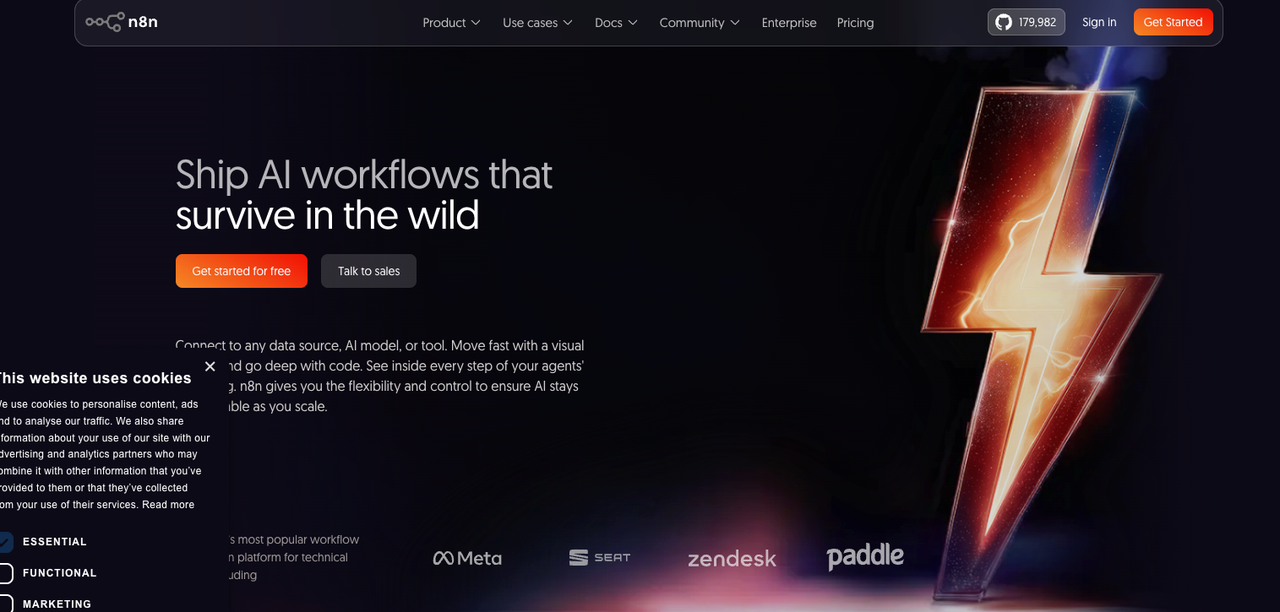
n8n (Open Source Workflow Automation)
If you want workflow automation with full control, n8n's workflow automation documentation is worth bookmarking. It's open-source, self-hostable, and connects to hundreds of apps. Not an AI agent per se, but you can wire AI steps into complex automated pipelines. A lot of solo operators I know use it as connective tissue between tools.
Strengths: Extremely flexible, self-hosted option available, massive integration library.
Limitations: Learning curve; more "automation builder" than conversational agent.
Best for: Technical solo founders and small teams who want full workflow control without SaaS lock-in.
How to Choose Based on What You Actually Need
Three questions I'd ask before picking:
Do you need autonomous execution, or smart assistance? If you need something to do things on your behalf — browse, click, create, deploy — you want an agent: ChatGPT Agent, Lindy, or AutoGPT. If you mostly need help thinking or drafting, Claude or Perplexity might be enough.
How important is the free or low-cost tier? AutoGPT and n8n cost nothing upfront. Perplexity's free tier is genuinely useful. ChatGPT Plus at $20/month is a reasonable balance of power and accessibility for most people.
Are you a solo creator or running a team? Solo → ChatGPT Agent or Claude are lowest friction to get started. Building a repeatable team process → Lindy or n8n give you more structure.
When Manus AI Is Still the Better Choice
Worth being honest here: Manus is genuinely impressive for certain things, and I don't want this to read like a takedown.
If you need parallel deep research — deploying multiple agents simultaneously to crawl sources and synthesize findings — Manus does that in a way none of the above tools quite match. It's also unusually good at taking a high-level goal and breaking it into executable subtasks without much hand-holding from you. According to Anthropic's research on autonomous AI systems, agentic AI that handles complex multi-step tasks is still an evolving space — which is part of why Manus stands out when it's actually accessible.
If you have access and the budget, and your work involves complex multi-step research and production workflows end to end, it earns its place.

FAQ
Are there free Manus AI alternatives? Yes — AutoGPT is open-source and free to run with your own API keys. Perplexity has a solid free research tier. ChatGPT has a limited free plan that includes basic agent features.
What's the best Manus alternative for non-technical users? ChatGPT Agent or Lindy. Both are no-code with clean interfaces. Lindy is better for business automation; ChatGPT Agent is more general-purpose.
Is there an open-source alternative to Manus AI? AutoGPT is the most well-known. It requires technical setup but gives you full control. For a broader overview of what open-source agents can do, the Papers With Code leaderboard on agent benchmarks is a useful reference.
What happened to Manus AI recently? It was acquired by Meta in late 2025 as part of their push into autonomous AI agent technology. Access and pricing details are still evolving as of early 2026.
I'm still experimenting with a few of these — especially Lindy, which I only set up recently. If you're also poking around the AI agent space, hopefully this saves you some of the tab-juggling I did. Anyway, back to building things.
Previous Posts:
Explore real-world AI agent use cases and how they actually perform in practice
See how solo operators run a one-person business like a team using AI roles and workflows
Understand how AI automation services are priced in the real market (and why quotes vary so much)
Compare how Lindy and Gumloop differ when building agent-style workflows
Learn how different AI agent tools compare when you actually test them on real workflows
Get automation tips for your workflow
Weekly insights for non-technical professionals. No spam ever.