Grok 3 API Is Open — Does It Lower the AI Cost Barrier for Solo Operators?
Grok 3 API is now open source. Here's what the pricing, free tier, and open access mean for one-person companies running AI workflows.138 chars
Nova here. A few weeks ago someone DM'd me: Grok 3's API is open now, pricing's public — worth switching to if I'm running things solo?
I've been asked this four or five times at this point. Let me give you an actual answer — even if it's not the one people are hoping for.
I've been running Grok 3 through the API on and off for a couple of months. Nothing heavy — background scripts for daily digest summaries, RSS parsing, some throwaway content drafts. Not a deep stress test, but enough to form a real take.
What Is Grok 3 API
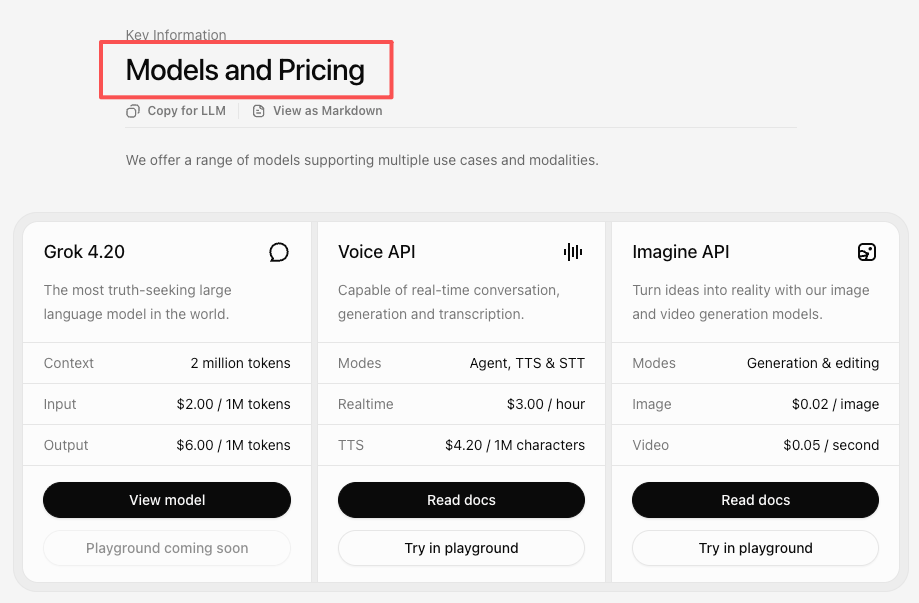
xAI opened the Grok 3 API publicly in April 2025. Pricing hasn't moved since: $3 per million input tokens, $15 per million output, 131K context window. I double-checked against the xAI models and pricing docs — that's the rate as of when I'm writing this.
The word "open" trips people up here, so let me split it.
API access is open — no waitlist, you sign up, get a key, and there's a $25 starter credit on new accounts. Same friction level as OpenAI or Anthropic at this point.
Open source is a different story. Musk said Grok 3 would be open-sourced roughly six months after Grok 2.5 dropped, putting it around February 2026. Last time I checked Hugging Face, the Grok 3 weights weren't up yet. Worth checking directly if that matters to you.
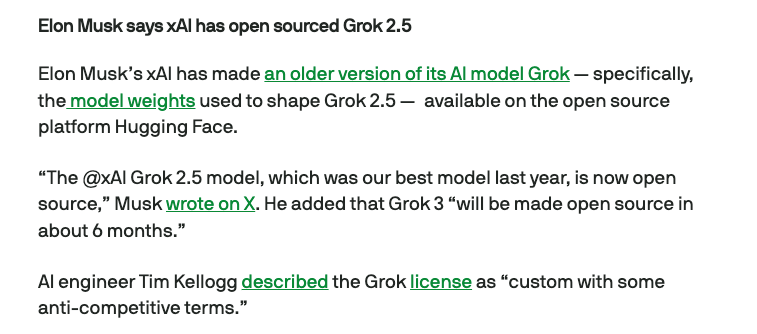
One more thing worth flagging: Grok 2.5 was released under a custom "Community License" with anti-competitive clauses — not a real MIT or Apache license. If Grok 3 follows the same pattern (and the Wikipedia entry on Grok suggests it will), "open weights" won't mean "free to build a product on." I could be wrong here — but don't assume the headline means what the headline sounds like.
Grok 3 Pricing vs OpenAI vs DeepSeek
The thing that surprised me first time I looked at the pricing page: Grok 3 isn't actually the cheap option.
Prices pulled from each provider's docs, verified late April 2026.
Grok 3 at $3/$15 sits right next to Claude Sonnet — it's priced as a premium model, not a cost-leader. If you want cheap from xAI, you want Grok 3 Mini ($0.30/$0.50) or Grok 4.1 Fast ($0.20/$0.50). Those actually undercut most of the market.
DeepSeek V3 is still the pricing floor for serious general-purpose models. An order of magnitude below Grok 3 on input, about 14x cheaper on output.
So when someone says "Grok 3 is cheap now" — it's not. The Mini and Fast variants are cheap. That distinction matters.
Is Open Source the Right Move for Solo Operators?
Here's where I have to be honest about what I actually care about, which is probably what you care about too.
When open API access genuinely changes things for a solo operator:
You've been running the same workload for months, your token bill is climbing past ~$80/month, and you already know exactly what prompt shapes work. Swapping to a cheaper API is a real lever.
You're building something that needs real-time web context (Grok's X/Twitter integration is genuinely different from what the others have).
You're running high-volume output-heavy jobs — this is where Grok 3 Mini or DeepSeek actually pay for themselves.
When it doesn't:
You're spending less than ~$30/month on tokens. At that volume, the API line item isn't your bottleneck. Switching saves single-digit dollars and costs you a day of re-testing prompts.
You're still figuring out what you want to build. Cheaper tokens don't help you design the thing. I've watched myself do this — chase a 5x cheaper API while the actual problem was that my prompts weren't stable yet.
Your main friction is gluing steps together, not model cost per call.
I used to think more pricing transparency would be the unlock for people like us. I've changed my mind on that. The unlock is figuring out what your stable workflow looks like first. Price optimization is a problem you earn the right to solve.
What Cheaper APIs Don't Solve
This is the part I wish someone had told me earlier.
Once I'd done the math on my own usage, I realized the real cost wasn't the token bill — it was the time I spent wiring things together. Pulling a doc from Drive, handing it to the model, pasting the output into a draft, running it through a second pass, saving the result somewhere I'd actually find it again. A call to Grok 3 versus GPT-5.2 versus DeepSeek is the same shape of one step in that chain. The chain itself is what eats my afternoon.
Managed agent platforms (Claude's, OpenAI's, the orchestration layer stuff) are solving a different problem — they handle the chain, not the per-call cost. Raw APIs give you flexibility and lower cost per call but leave the plumbing to you. Different tools, different stages of the same journey. If you're early and exploring, the managed stuff gets you moving. If you've nailed down the workflow and want to squeeze cost, the raw API route starts to make sense.
For where I am — mostly exploring, occasionally building something stable — I've settled into a mix. Grok 3 Mini for high-volume background tasks, Claude or GPT for the thinking-heavy stuff, DeepSeek for anything I want to run cheap and dirty at scale. Not a recommendation. Just where I landed.
FAQ
Is Grok 3 API free to try? New accounts get $25 in credits, no card required upfront. Check the current offer directly since terms change.
Should I self-host Grok 3 when the weights drop? Probably not, if you're solo. The model is ~500GB. Unless you have a serious GPU setup or real compliance reasons, API access is cheaper than the electricity.
Is Grok 3 better than Claude or GPT-5 for solo work? Honestly, for most solo workflows — not meaningfully. Pick based on which one fits your writing style and whether you need real-time X data. Fit matters more than benchmark scores.
That's my honest take, two months in. Cheaper tokens are real, but they're not the barrier most solo operators actually hit. When you need this level of price optimization, you'll know.
Previous Posts:
Get automation tips for your workflow
Weekly insights for non-technical professionals. No spam ever.