How to Get Your First 100 Customers as a Solo Founder
Getting your first 100 customers as a solo founder takes a different playbook than most guides suggest. Here's what actually works — and what to skip.
Hey, I'm Nova. There's a phase every solo founder goes through that nobody really prepares you for.
You've built the thing. Or at least a version of it. You believe in it. You've explained it a hundred times to friends who nod politely. And then you open your laptop and think: okay, now what?
Getting to the first 100 customers isn't primarily a marketing problem. It's not a product problem either, usually. It's a patience and ego problem — because the work that actually moves the needle at this stage looks nothing like "building a business." It looks embarrassingly manual. It feels slow. And it is slow. That's kind of the point.
I've been tracking this closely — watching indie founders, micro-SaaS builders, solo consultants — and the patterns are remarkably consistent. Here's what I've actually seen work, and more importantly, why it works at this specific stage when nothing else does.
Why the First 100 Are Harder Than Everything That Comes After
No Brand, No Social Proof, No System — Yet
When you have zero customers, you have nothing to point to. No testimonials, no case studies, no "as seen in." You're asking people to take a bet on you based entirely on your conviction and their trust. That's a high bar, made higher by the fact that you're doing it alone — no cofounders to split the pitch load, no team to handle follow-up while you're building.
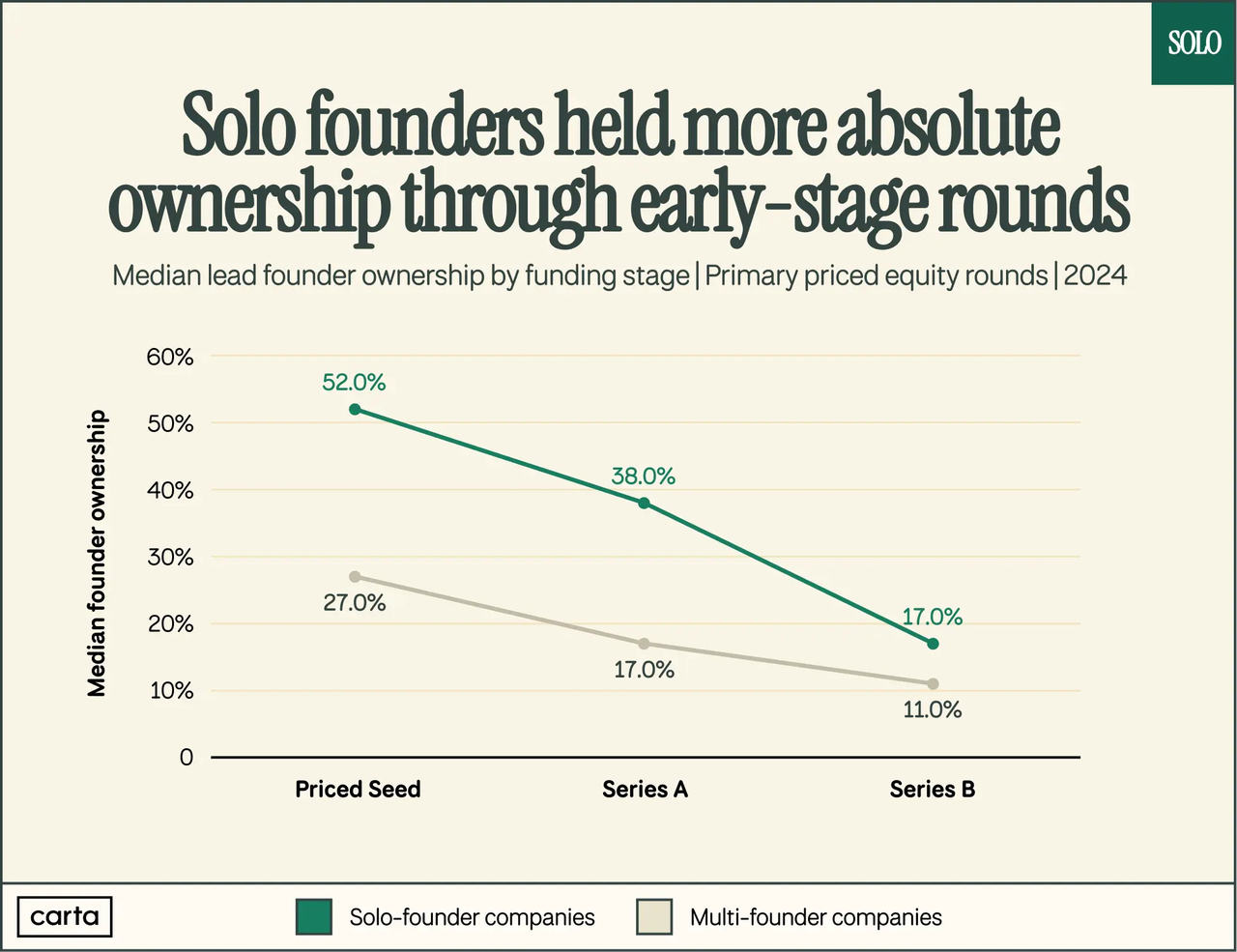
According to Carta's 2025 Solo Founders Report, the share of new companies started by solo founders steadily increased over the last few years, accelerating in the first half of 2025 when over one-third of new companies were solo-founded. The path is increasingly common — but it's still structurally harder at the very beginning. You're doing the work of a team of two or three in a phase that demands constant outreach, rapid iteration, and honest self-assessment simultaneously.
The first 100 customers milestone is specifically hard because you don't yet have the systems, feedback loops, or brand recognition that makes growth compound. You're building the runway while also trying to take off. This is the phase where most founders either quit too early or make a critical strategic error: they try to skip it.
Here's the boundary condition that matters: this playbook applies to founder-led B2B and prosumer products in the $20–$200/month range. If you're building a free consumer app that depends on viral growth, the mechanics are different. If you're selling $50k enterprise contracts, the mechanics are also different. What follows is specifically for the person selling something real to someone with a real problem, at a price where word-of-mouth can actually travel.
Why This Phase Is Also Your Best Research Window
Here's the flip side, and it's real: you will never again be this close to your customer.
At 5 customers, you can have a 30-minute call with all of them in the same week. At 500, you can't. At 5,000, you're reading aggregated survey data and guessing. The discomfort of this early phase — the manual outreach, the personal conversations, the rejection — is also what gives you information no analytics dashboard can replicate.
Think about what Wilson Wilson, co-founder of Senja.io, did in 2022 after launching a testimonial collection tool: he spent the first months in the exact communities his potential customers used — indie hacker forums, Twitter conversations about social proof — answering questions, not pitching. His first paying customer arrived in June 2022 within weeks of launch. By just two months later, Senja had crossed $100 MRR. By November 2025, the product had crossed $1M ARR with 3,000 paying customers, 100% bootstrapped. The early community work wasn't just a tactic. It was the foundation that made everything compound later.
I keep coming back to what Sahil Lavingia described in The Minimalist Entrepreneur (2021, Portfolio/Penguin): build a community first, then solve a problem for them — not the other way around. Most solo founders invert this. They build, then look for community. The few who start in the community already know what to build — and they already have people who trust them enough to buy.
Start with the Community, Not the Product
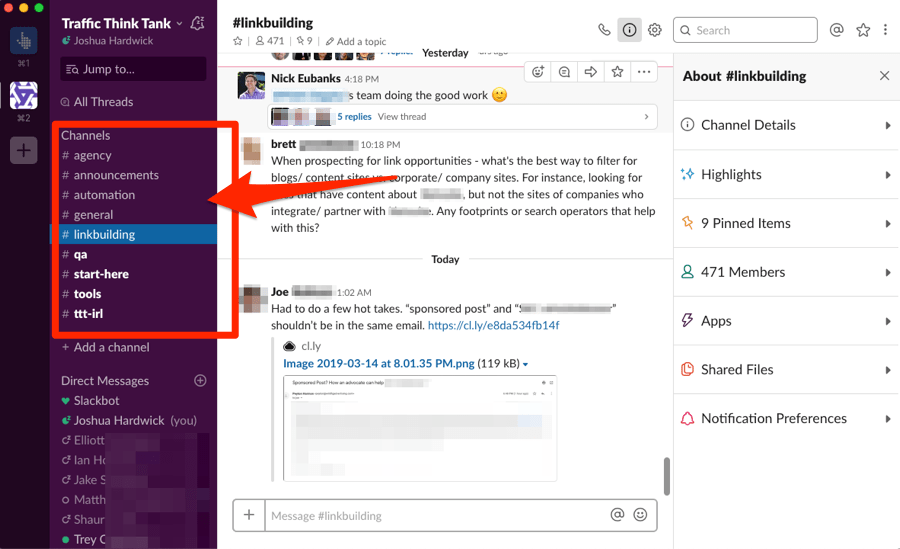
Find Where Your Target Customer Already Spends Time
Before you post anywhere, before you DM anyone, the first question is: where do the people I'm trying to help already gather? Not abstractly — specifically.
Is it a Slack group? A subreddit? A Discord server? A niche newsletter comment section? A specific LinkedIn hashtag? An in-person meetup?
Pick one. Go there as a participant, not as a founder. Read the threads. Notice what questions keep getting asked. Notice what frustrations surface on repeat. Notice who is clearly knowledgeable and who is clearly struggling.
This isn't research in the clinical sense — it's just paying attention. And it's how you start to understand the exact language your customer uses to describe their own problems. That language matters more than you'd think. The words they use to describe pain points are almost always more effective in your positioning and copy than anything you'd write yourself from first principles.
The causal mechanism here is straightforward: community trust transfers. When you've been genuinely helpful in a space for weeks before mentioning your product, the community's existing trust in each other partially extends to you. When you show up as an advertiser, none of that transfer happens.
Help First, Pitch Never (or Almost Never)
Once you've found the community: contribute. Answer questions. Share something useful. Post what you've learned. Do this for weeks before you mention your product at all.
I know. That sounds slow. It is slow. But people can smell a pitch disguised as a contribution from miles away. If your first ten comments are all variations of "great point, by the way check out my tool," you'll get ignored at best and banned at worst. And you'll deserve it.
The ones who get traction early are almost always the ones who gave genuine value first, built familiarity, and then — almost incidentally — mentioned what they were building. By that point, people are already curious.
The data supports this. According to Freemius's 2025 State of Micro-SaaS report, which analyzed data from MicroConf's survey of nearly 700 independent SaaS founders: 50% of founders lean primarily on communities and referrals, and those channels report stronger lifetime value — especially in the early stages. Another 47% of founders said that integrations, partnerships, communities, and forums became their most dependable and controllable source of growth. Community-sourced customers tend to stick around longer, complain more constructively, and refer more often. They came to you because they trusted the environment you showed up in — not because you ran an ad at them.
The Manual Phase You Can't Skip
Why One-on-One Conversations Beat Launch Campaigns at This Stage
I'll just say it: launching to no audience produces very little. Product Hunt launches, cold email campaigns, announcements on accounts with 200 followers — these can feel like action, but the returns at this stage are usually marginal. The thing that actually works is talking to people, one by one, and either helping them or finding out why you can't.
This is exactly what Paul Graham described in his 2013 essay Do Things That Don't Scale, which remains one of the most practically useful pieces of founder advice ever written. His central point: "The most common unscalable thing founders have to do at the start is to recruit users manually. Nearly all startups have to. You can't wait for users to come to you."
His example was Stripe. The Collison brothers didn't send emails asking people to try the beta. They said: "Right then, give me your laptop" — and set people up on the spot. That specific pattern — what Graham calls the "Collison installation" — is an extreme version, but the underlying mechanism is the same: manual, direct, friction-removing. That's what early distribution actually looks like.
The reason this works when campaigns don't isn't just about effort. It's about information asymmetry. In a one-on-one conversation, you can adapt in real time. You hear the objection and respond to it. You understand the specific workflow context. You learn which version of your pitch lands. A campaign can't do any of that.
What to Actually Say — and What to Listen For
When you're having these early conversations, your goal isn't to close. It's to understand.
The questions that surface the most useful signal: "How do you handle this problem right now?" "What have you already tried?" "What would need to be true for you to switch?"
Listen for the language again. Listen for the workarounds. Listen for the specific moments of friction. When someone describes a problem in detail, unprompted, that's a signal. When they shrug and say "it's fine," that's also a signal — just a different one.
The ones who become your first customers are almost never "convinced" in the traditional sales sense. They're people for whom the problem was already urgent, who found your solution at the right moment. Your job is to be present in enough right places, often enough, that those moments happen to you rather than to your competitors.
A practical note on boundary conditions: this conversational approach has real limits. If you're selling to enterprise buyers with long procurement cycles, one-on-one conversations are necessary but not sufficient — you'll also need structured sales processes. If you're building a pure consumer utility, conversations matter less than distribution math. The sweet spot for this approach is prosumer and SMB, where the buyer is also the user and can make a decision in days, not months.
When to Charge, When to Offer Free, and Why This Matters Earlier Than You Think
Free Users Give Feedback; Paying Customers Give Signal
There's a seductive logic to free early on: lower the barrier, get more users, learn faster. And it's not entirely wrong — for a specific window, with specific people, for specific learning goals.
The problem is that free users and paying customers behave fundamentally differently. Free users will tell you your product is great and then never open it again. Paying customers will tell you what's broken because they paid for something that was supposed to work.
According to a Wynter survey of 100 B2B SaaS marketing executives — cited in Freemius's 2025 State of Micro-SaaS report — 73% of B2B buyers trust peer recommendations over other sources, and 58% start the buying process with a referral or recommendation. That trust dynamic only activates when someone has actually committed — financially, even if the amount is small. A free user who "loves the product" is not yet a node in that referral network. A paying customer who solved their problem is.
The signal you're looking for at this stage isn't "do people like this enough to use it for free?" It's "do people value this enough to pay for it?" Those are different questions with very different answers — and confusing them is one of the most common ways early-stage founders waste months in the wrong direction.
Charge something early. Even a fraction of your eventual price. MicroConf's 2024 survey of nearly 700 independent SaaS founders found that 70% now ask for a credit card upfront, a significant shift from earlier years. The reason: early revenue isn't just revenue — it's a filtering mechanism that selects for customers who are serious enough to pay, which makes every subsequent customer interaction more informative.
Huh. Okay. That number surprised me too, the first time I saw it.
How to Go from 10 to 100 Without Burning Out
Referrals and Compounding Trust
Somewhere between customer 10 and customer 30, something shifts. If you've done the earlier work right — community presence, genuine conversations, early charging — you start getting inbound. Someone mentions you to someone else. A customer shares the tool in a thread. Someone finds a post you wrote six weeks ago.
This is referral compounding, and it's the primary engine that gets most solo founder businesses from 10 to 100. Not a launch campaign. Not a PR spike. Just enough happy early customers who talk about you in the places your future customers already read.
The causal mechanism: each satisfied customer in a niche community is a standing recommendation that activates every time someone in that community faces the problem you solve. You don't need many of these. You need them in the right places.
The most reliable way to generate this: make the experience of being your customer remarkable at this stage. Not features — responsiveness. A reply within the hour. A fix within the day. A personal check-in after onboarding. You can do this with 10 customers. You cannot do it at 10,000. It's one of the few genuine structural advantages of being early and small, and most founders underuse it.
Gil Hildebrand, founder of Subscribr, described this pattern precisely in a 2025 Indie Hackers post: he launched publicly in April 2024 targeting YouTube creators who needed scriptwriting help, spent the first weeks in YouTube creator communities answering questions about content strategy, and by 100 days post-launch was hitting $10k MRR. By late 2025, the product was tracking toward $1M for the year. The compounding started from the community work before the product even existed.
What to Systematize — and What to Keep Doing Manually
At some point, you will have to stop doing everything by hand. But the timing of this decision matters more than most founders realize.
Systematize too early and you lose the customer signal you need to make good product decisions. Systematize too late and you're drowning in manual work while trying to handle 80 customers simultaneously.
The heuristic I've landed on: systematize anything that's about consistent delivery; keep manual anything that's still about learning. Onboarding emails? Automate once you've refined them through 20+ manual onboardings and know what actually works. Customer check-in calls? Keep them human as long as you possibly can — these are where you find out what's really happening.
The mechanism behind this rule: automation captures a snapshot of your current best understanding. If you automate before your understanding is stable, you've locked in the wrong process at scale. The first 100 customers is precisely the phase where your understanding should still be changing.
What the First 100 Customers Actually Teach You
By the time you reach customer 100, you'll know things about your product that no amount of user research or analytics could have told you.
You'll know which customer profile actually converts and which one churns in two weeks. You'll know which features get used daily and which ones nobody touches. You'll know the specific moment in onboarding where people get confused. You'll know how people describe your product to their colleagues — and it will almost certainly be different from how you describe it.
You'll also know something harder to quantify: whether you actually want to keep doing this. The first 100 customers is a stress test of the business idea, but it's also a stress test of the founder. Not everyone gets to 100 and still loves what they're building. Some people discover, rightly, that this isn't the thing. That's valuable information too — and arriving at it after 100 real customer interactions is far more reliable than arriving at it after reading no-code launch tutorials.
The founders who come out of this phase well aren't the ones who executed most perfectly. They're the ones who stayed curious and honest enough to keep actually listening.
Common Mistakes Solo Founders Make in This Phase
Waiting for a "launch moment" before doing real outreach. There is no launch that substitutes for manual conversations. The launch can amplify existing traction. It cannot create traction from zero.
Treating free users as validation. They're not. They're research subjects, at best. Actual validation is someone giving you money because your product solved their problem. Nothing else is the same signal.
Optimizing copy and positioning before talking to anyone. You don't know the right words yet. The words come from 20+ customer conversations, not from your own product instincts.
Trying to automate distribution before understanding what distribution works. If you don't know exactly why the first 20 customers found you and converted, you can't scale the channel. The automation should come after the understanding, not instead of it.
Scaling too fast after an early spike. A Product Hunt launch that brings in 30 sign-ups in two days feels like traction. It might not be. Wait and see who's still active in 30 days before drawing conclusions.
According to Carta's 2025 Solo Founders Report, AI has expanded what individual founders can accomplish — which is genuinely true and important. But the core work of getting to 100 customers hasn't changed: it's still relational, manual, and slower than you'd like. That's not a bug. That's the mechanism. The things that feel slow — community trust, direct conversations, careful early charging — are slow precisely because they're building something that compounds. The things that feel fast — launch campaigns, cold lists, automated outreach to strangers — are fast precisely because they don't compound at this stage.
FAQ
Q: Do I need to be on social media to get my first 100 customers?
Not necessarily. Depends entirely on where your specific customer already spends time. Some niches are highly active on LinkedIn or X. Others live almost entirely in private Slack groups, industry forums, or niche newsletters. The question to answer isn't "which platform should I be on?" — it's "where do the 500 people who most need my product already gather?" Social media is one possible answer, not the default one.
Q: How many conversations do I need before I have enough information?
There's no magic number, but most founders I've watched go through this phase find that somewhere between 15 and 25 substantive conversations — not demos, actual problem-exploration conversations — start to surface repeating patterns. When you hear the same frustration described in almost the same words by four different people, you have enough signal to act on. When you're still hearing fundamentally different problems from every conversation, keep going.
Q: What if I can't find a community relevant to my product?
That's actually important diagnostic information. If there's no community actively discussing the problem you're solving, either the problem isn't felt widely enough to generate community organically, or the community exists somewhere you haven't looked yet. Both of those are worth investigating seriously before continuing to build. The absence of community is a market signal, not just a distribution inconvenience.
Q: Should I offer a lifetime deal or steep discount to attract early customers?
Be careful. Discounts attract price-sensitive customers who are often your worst long-term fit — they churn fastest, complain most about pricing, and refer the least. A better approach: charge a fair early-adopter price in exchange for feedback access, a case study, or the genuine goodwill of being involved in building something. You want customers who believe the product is worth paying for, not customers who bought because it was 80% off and won't tell you anything useful.
Q: How do I know when I've done enough manual work and can start systematizing?
When you can write down, in enough detail that a new team member could follow it, exactly what you'd do to acquire one more customer — the specific communities, the specific message type, the specific follow-up sequence — you know enough to systematize. If you can't describe your acquisition process at that level of specificity, you don't yet understand it well enough to automate. The documentation test is a useful gate.
Observations from tracking indie founders, micro-SaaS builders, and solo operators through this phase. Statistics cited are from the sources linked above; all data reflects the most recently published figures at time of writing. Individual results vary substantially based on market, execution, and timing.
Previous Posts:
Want a practical example of how solo operators actually set up their daily workflows? Start here
Still figuring out how to structure your AI-powered workflow end-to-end? This guide breaks it down
If you're exploring automation tools, this comparison helps clarify what fits your setup
Not sure what AI agents actually do in real work scenarios? These examples make it concrete
Thinking about going deeper? Here's what it really takes to build your own AI agent
Get automation tips for your workflow
Weekly insights for non-technical professionals. No spam ever.