
DeepSeek V4 API: Cost and Impact for Solo Operators
DeepSeek V4 API cuts inference costs significantly. Here's what that means for one-person companies building on AI in 2025.126 chars
Hello, I'm Nova. I've been tracking DeepSeek's pricing pretty closely lately — partly out of curiosity, partly because API costs are one of those things that quietly eat into your margins when you're running everything yourself.
DeepSeek V4 has been generating a lot of noise in developer circles since early March 2026. And honestly? When I dug into the actual numbers, I had to check them twice.
Before getting into the analysis, one important caveat: as of mid-April 2026, DeepSeek V4 has not been officially released via the public API. DeepSeek's official API still serves deepseek-chat and deepseek-reasoner, both mapped to DeepSeek-V3.2 with a 128K context window — no V4 model ID has appeared, no changelog entry, and no official announcement has been made. Codersera Blogs The information below reflects what's publicly known from pre-release architecture papers, benchmark leaks, and a Reuters report from April 3, 2026 confirming V4 is expected to launch "within the next few weeks." Codersera Blogs
With that said — here's what we know, what it means in practice, and whether the cost story actually changes anything for solo operators.
What Is DeepSeek V4
DeepSeek V4 is the successor to V3.2 — the general-purpose model currently powering both deepseek-chat and deepseek-reasoner endpoints. V4 is not a competing product to DeepSeek R1; they serve different use cases in the same way GPT-4o and o3 do. V4 handles chat, code completion, document analysis, and API integrations. R1 is for deep chain-of-thought reasoning.
What Changed from V3
Three architectural innovations are documented from published research:
Engram conditional memory is the most interesting one. Traditional Transformer-based LLMs compress all learned knowledge into neural network weights. Engram introduces a new dimension by adding conditional memory through efficient lookup mechanisms — separating static knowledge retrieval from dynamic neural reasoning. In practical terms, this is what enables the 1M-token context window without the retrieval degradation that usually comes with very long contexts. A published paper shows Needle-in-a-Haystack accuracy jumping from 84.2% to 97% on a 27B test model.
DeepSeek Sparse Attention (DSA) reduces attention complexity, and Manifold-Constrained Hyper-Connections (mHC) stabilizes training at trillion-parameter scale. Together, V4 scales to approximately 1 trillion total parameters but activates only ~37B per token — roughly the same active compute as V3 — which keeps inference costs manageable despite the much larger model size.
For a deep technical walkthrough of how these components fit together, DeepSeek's Engram paper (arXiv:2601.07372) is worth reading if you're technically inclined.
V4 Lite vs Full Model
On March 9, Chinese tech media reported that DeepSeek's website showed a model update with expanded context handling — the developer community called it "V4 Lite." DeepSeek hasn't officially confirmed specs, but the pattern from previous releases suggests a staged rollout: a lighter variant first, then the full model. I'd expect V4 Lite to be usable with less compute and potentially lower pricing — similar to how the V3.2 line positioned itself against R1.
DeepSeek V4 API Pricing vs Alternatives
This is where things get genuinely interesting. Based on confirmed V3.2 pricing and projections from the DeepSeek official API docs, here's how the cost landscape looks heading into V4's launch:
Here's the comparison across the three major options at the flagship level:
Model | Input /M tokens | Output /M tokens | Cached input /M | Context window | Tier |
|---|---|---|---|---|---|
DeepSeek V4projected (not yet live) | ~$0.14–$0.30 | ~$0.28–$0.50 | ~$0.03–$0.07 | 1M tokens | Most affordable |
DeepSeek V3.2current live model | $0.28 | $0.42 | $0.03 | 128K tokens | Most affordable |
Grok 4.1 FastxAI | $0.20 | $0.50 | auto-cached | 2M tokens | Budget-competitive |
Grok 4xAI flagship | $3.00 | $15.00 | auto-cached | 256K tokens | Mid-tier |
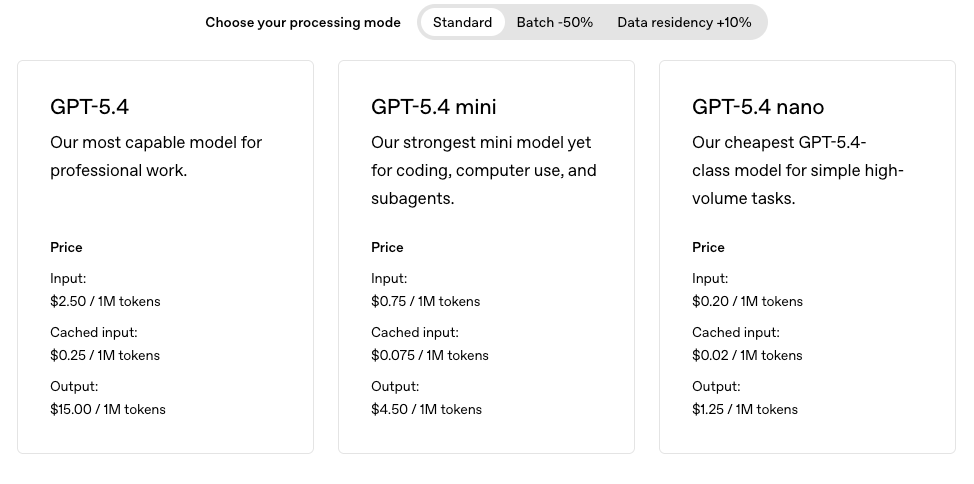
GPT-5.4OpenAI flagship | $2.50 | $15.00 | $1.25 | 272K / 1M+ | Premium |
GPT-5.4 (>272K ctx)long-context surcharge | $5.00 | $15.00 | — | up to 1.05M | Premium+ |
V4 pricing ranges reflect lower and upper projections from multiple analyst sources. Official pricing will only be confirmed at launch. Current live API pricing from DeepSeek official docs. GPT-5.4 and Grok pricing as of April 2026.
According to OpenAI's official pricing page, GPT-5.4 costs $2.50 per million input tokens and $15.00 per million output tokens Get AI Perks — and that's before you hit the 272K context threshold, where input costs double. Grok 4.1 Fast comes in at $0.20 per million input tokens with a 2-million-token context window, cheaper per token than GPT-5 mini, Gemini Flash, and every Anthropic model.
The gap is real. But let me get into what it actually means.
DeepSeek V4 GitHub and Open Access Scope
One thing that matters a lot for solo operators: DeepSeek V4 is releasing as an open-weight model. V4 was built with open-source principles, continuing DeepSeek's pattern from V3 which was trained for a reported $5.6 million — versus the hundreds of millions spent by OpenAI, Google, and Anthropic per frontier model.
This means you can self-host. The practical reality? Around 50 million tokens daily, self-hosting economics start to make sense. Below 10 million tokens daily, managing infrastructure feels like overkill — the API is cheap enough that the operational simplicity is worth the cost.
For most solo builders I know, we're nowhere near 50M tokens/day. The API is the right call.
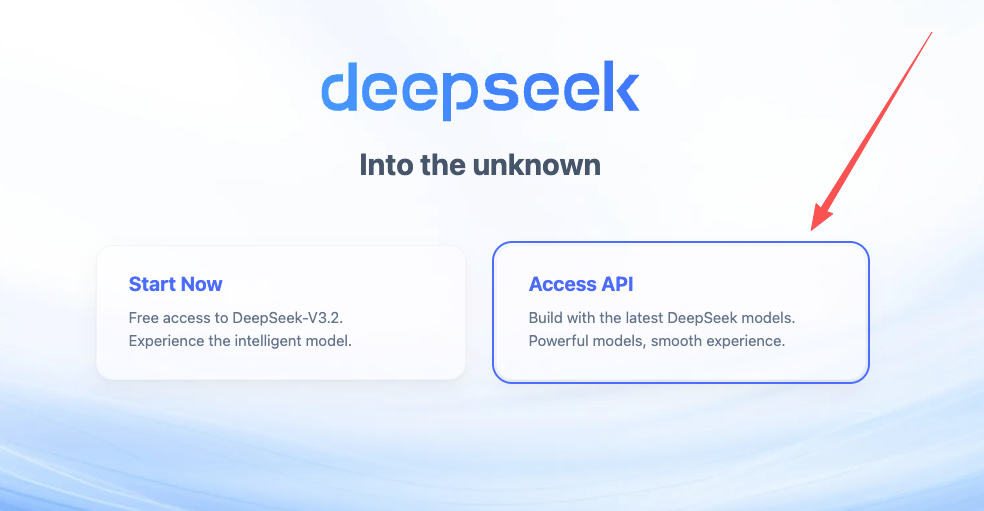
The model weights will be on Hugging Face and GitHub. The API endpoint lives at api.deepseek.com. Worth bookmarking both.
Does Cheaper Inference Change How Solo Operators Work?
Okay, this is where I want to be direct. Because I think there's a lot of muddled thinking here.
Where Model Cost Is Actually the Bottleneck
If you're running high-volume automated pipelines — processing thousands of documents, doing batch classification, running content generation at scale — yes, the cost difference is massive. One developer running DeepSeek V4 in production reported a monthly bill of $18 for a workload that would've cost around $380 on GPT-4o. WaveSpeedAI That math is hard to argue with.
The same applies if you're building a product on top of an LLM and API costs show up in your COGS. A 10–20x cost reduction on inference literally changes your unit economics.
For these scenarios, cheaper inference is genuinely meaningful.
Where Cost Isn't the Limiting Factor
But here's the honest version: for most of us running one-person content, research, or product operations, the API bill is rarely the actual constraint.
I spent some time last month mapping out where I actually lose time in AI-assisted workflows. The breakdown was roughly: setup and prompt engineering (a lot), context management across long sessions (more than expected), and inference cost (almost none). The model cost was invisible in my day.
The friction isn't tokens. It's designing workflows that don't break, maintaining context across complex tasks, and the human time to review outputs.
The Costs That Don't Go Away
Setup Time and Workflow Design
Switching to a new model isn't free. Even with OpenAI-compatible APIs (which DeepSeek uses), you still need to test prompts, validate outputs, and rebuild any tool integrations. That's time.
I'd estimate a real migration from a working GPT-5 setup to DeepSeek takes somewhere between a few hours and a few days depending on complexity — not plug-and-play.
Context Management Challenges
The 1M-token context window in V4 sounds like a dream. And for some use cases it genuinely is. But managing context at that scale — deciding what to include, structuring it well, avoiding retrieval degradation — is still a design problem that falls on you.
DeepSeek's claimed SWE-bench scores come from pre-release internal benchmarks only, and independent evaluations are not yet available. I'd hold off on making infrastructure decisions based on unverified performance numbers. Wait for third-party evaluation.
What Cheaper Models Still Can't Automate
The tasks that still require the most time in my workflow — editing for voice, making judgment calls on ambiguous briefs, deciding what to cut — don't get faster or cheaper with cheaper tokens. The rate-limiting step is human attention, not compute.

Is DeepSeek V4 API Worth It for Solo Operators?
Let me give you an actual answer rather than "it depends."
When DeepSeek V4 Is the Right Choice
Use it if you're building something where API costs show up in your business model — a SaaS product, a batch processing pipeline, high-volume content generation at scale. The cost difference is real enough to matter.
Also worth it if you're experimenting and want to test long-context behavior without worrying about cost. The 1M-token window plus low pricing is a genuine combination.
When Cost Savings Actually Matter
The savings compound when you have repeating prompt structure that benefits from cache hits. If your prompts share a common prefix — system instructions, tool definitions, document templates — cached input tokens cost only $0.03 per million, a 90% discount. A production application with well-structured prompts can see effective input costs below $0.05/M tokens.
That's worth structuring your prompts around regardless of which model you use.
When You Should Still Choose Alternatives
If your work involves hard, multi-file coding problems or agentic workflows where output quality is the constraint — wait for independent benchmarks before committing. V4's claimed SWE-bench Verified score of ~81% would match Claude Opus 4.6 at a fraction of the cost, but those numbers are from DeepSeek's own testing only.
If reliability and ecosystem maturity matter more than cost — GPT-5.4 or Claude Sonnet 4.6 are currently more battle-tested for production agentic use. You can verify Anthropic's current model capabilities and pricing directly in their documentation.
Also: if you have data privacy requirements, self-hosting is the only real option. The xAI API documentation and OpenAI's platform are both more established for enterprise data handling at this point.
FAQ
Is DeepSeek V4 Really Cheaper Than OpenAI?
Yes, by a large margin — but the exact ratio depends on which OpenAI model you're comparing to. Against GPT-5.4 standard, the projected V4 pricing is roughly 8–17x cheaper on input tokens and 30x cheaper on output. Against GPT-5 mini, the gap is smaller. I'd recommend using the OpenAI pricing page and DeepSeek's official pricing docs side-by-side to calculate your specific workload cost before assuming savings.
When Should You Use V4 Lite vs Full?
V4 Lite will likely be better for latency-sensitive or simpler tasks — think classification, summarization, basic Q&A. Full V4 makes sense when you need the 1M-token context or the coding/reasoning benchmark improvements. I haven't tested V4 Lite myself yet, so I can't give you a specific comparison — worth watching for independent reviews post-launch.
Is It Production-Ready for Solo Builders?
Honestly? Not yet, because it's not released. When it launches, the honest answer will depend on what kind of work you do. For document processing and content workflows, probably yes quickly. For agentic coding pipelines, I'd wait a few weeks for real-world reports before committing. DeepSeek's API also doesn't enforce strict rate limits, which is genuinely useful for solo builders running batch workloads.
Anyway, that's where things stand. The cost story is real and the architecture improvements are interesting — but V4 isn't live yet, and cheaper tokens don't automatically mean better workflows. Worth keeping an eye on the next few weeks.
Previous Posts:
→ Understand how AI workflows actually break down beyond model cost
→ Learn why context management, not tokens, is the real bottleneck
→ Explore how AI agents change the way solo operators run systems
→ See how persistent AI memory impacts long-term productivity
Get automation tips for your workflow
Weekly insights for non-technical professionals. No spam ever.