
Claude Managed Agents: What They Mean for Solo Companies
Claude Managed Agents lets AI delegate tasks across systems. Here's what it means for solo operators — and how it compares to building your own workflow.154 chars
Hi, I'm Nova. I've been watching the agentic AI space closely for a while now. Mostly from the outside — reading docs, following developer discussions, occasionally trying things that half work. So when Anthropic launched Claude Managed Agents in public beta on April 8, 2026, I paid attention.
Not because it's "revolutionary" or anything like that. I just kept asking: is this actually useful for the kind of person I am — one person running a content and research operation — or is this an enterprise thing dressed up to look accessible?
After digging in, my honest answer is: it depends on what you're trying to automate. And the distinction matters more than the marketing suggests.
What Are Claude Managed Agents
How They Differ from Standard Claude Usage
Most people use Claude the same way they use a chat interface. You type something, Claude responds, you copy what you need and move on. That interaction ends when the conversation ends. There's no persistent state, no memory of what you did yesterday, no ability to run something while you're not watching.
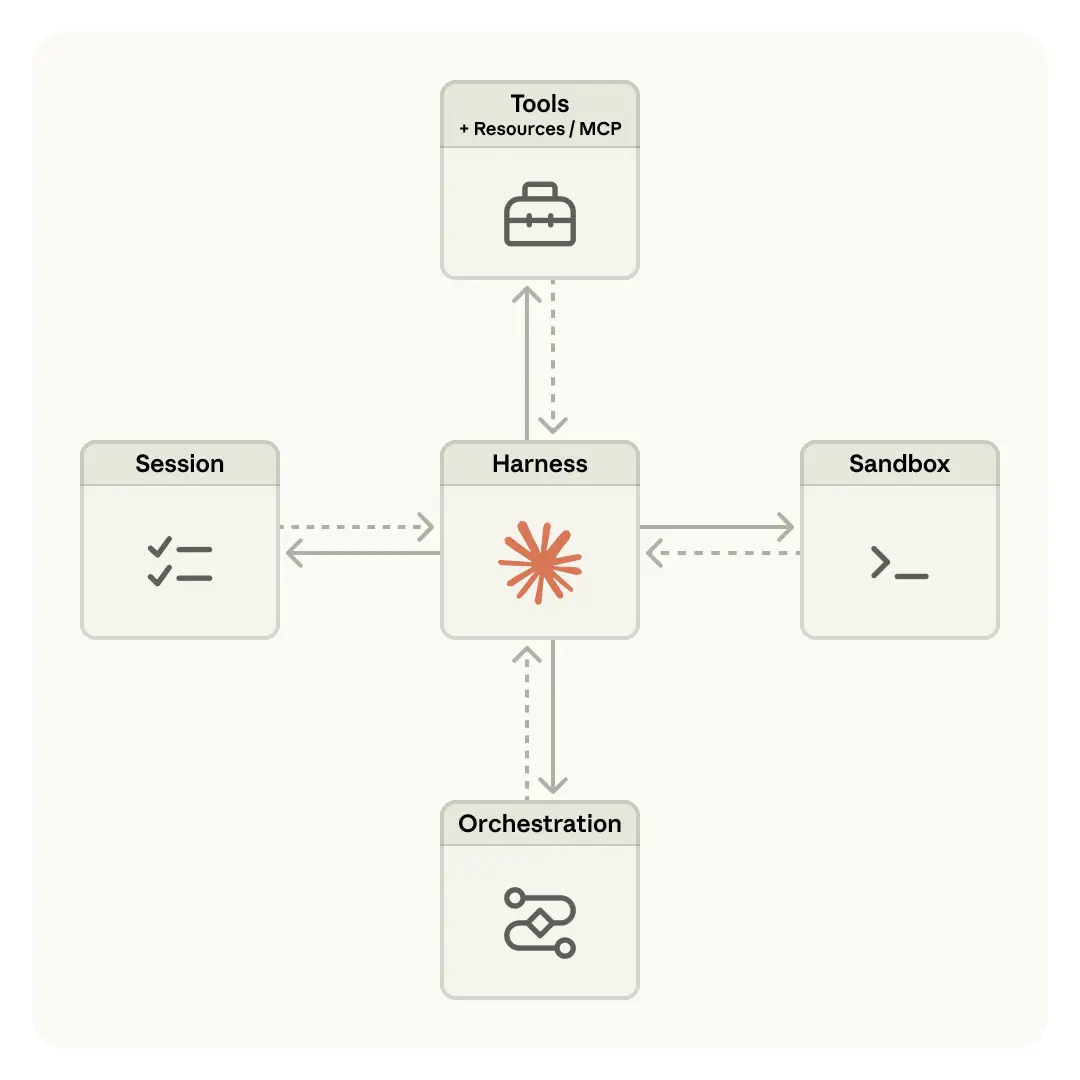
Claude Managed Agents is a fundamentally different layer. It's a managed infrastructure service from Anthropic that handles the execution environment for AI agents — sandboxing, long-running sessions, scoped permissions, tool execution, and observability — launched April 8, 2026 in public beta.
In plain terms: instead of you prompting Claude and waiting for a response, you define a task, set the guardrails, and the agent runs it — potentially for hours — without you sitting there. The infrastructure that makes that possible (containers, session state, error recovery) is handled by Anthropic, not you.
That's the actual difference. It's not about smarter responses. It's about who manages the execution environment.
What "Managed" Means in Practice
Claude Managed Agents lets users define agents either by describing the agent in natural language or through a YAML file, define their guardrails, and run them on Anthropic's platform, with all of the infrastructure abstracted away.
The billing reflects the architecture: standard Claude API token rates for model usage, plus $0.08 per session-hour for active agent runtime. No flat monthly fee — costs scale with how much the agent actually runs.
A few things worth knowing before getting excited:
The product is in public beta, which means behaviors may still change
Multi-agent coordination and self-evaluation features are still in "research preview" — you need to request separate access for those
Session data is stored in Anthropic's infrastructure, which matters for anyone with data residency concerns
I'm not listing these as dealbreakers. I'm listing them because I've seen too many people adopt new infrastructure before checking what's actually available right now versus what's coming.
How Claude Managed Agents Scale AI Work
Multi-Step Task Delegation in Practice
Here's the part that actually changes things for solo operators. Anthropic built Managed Agents as a hosted service that runs long-horizon agents on behalf of users — where "long-horizon" means tasks that span many steps, many tool calls, and potentially many hours of execution.
Think about the kind of work that currently eats your attention not because it requires hard thinking, but because it requires sustained, sequential attention across many small steps. Research synthesis across twenty sources. Structured data extraction from a pile of documents. Generating a first draft from a detailed brief, checking it against a style guide, reformatting, and outputting a final version.
That chain of steps can now run without you being present at each handoff.
In Anthropic's internal testing on structured file generation, Managed Agents improved task success by up to 10 points over a standard prompting loop — with the largest gains on harder, more complex tasks.
The multi-agent feature — where one agent coordinates others to parallelize work — is genuinely interesting. Notion is reportedly using it to run dozens of tasks simultaneously. For a solo operator, even a simpler version of that (one orchestrating agent spinning up sub-tasks) could meaningfully change throughput. I just haven't tested this part myself yet, since it's still in research preview.
Claude Computer Use on Windows
A separate but related thread: Claude's computer use capability has expanded significantly in early 2026. By March 2026, Anthropic had shipped 12 major features in approximately 12 weeks — including enhanced computer use capabilities with the Sonnet 4.6 update and persistent agent threads for Pro and Max users.
Computer use means Claude can control a desktop: navigate applications, click, type, read screens. This is distinct from Managed Agents (which runs in a sandboxed cloud environment), but they're part of the same directional push toward agents that can complete real multi-step workflows on your behalf.
For Windows users specifically, this opens up automation paths that were previously only accessible to people comfortable with scripting.
Agentic AI and Cybersecurity Risks
Okay, I need to spend a real paragraph on this because I think a lot of solo operators are underestimating it.
What Solo Operators Should Know About Permissions
When you give an agent persistent access to tools — your email, your cloud storage, your browser, your file system — you're creating a surface that didn't exist before. The agent acts on your behalf with your credentials. If the agent is manipulated, you're the one exposed.
Anthropics have acknowledged these risks openly in their documentation. Indirect prompt injection — where an agent reads untrusted content (like a webpage or email) that contains hidden instructions — is one of the most relevant attack vectors for computer use agents.
This isn't hypothetical. There's been real-world evidence of AI agents being manipulated in production, and the attack pattern often exploits the same trust that makes agents useful — they follow instructions embedded in content they're processing.
Where the Risk Actually Sits
The practical implication for a solo operator running Managed Agents isn't that you'll be hacked tomorrow. It's that the permissions you grant to an agent should be the minimum needed for the task, not a blanket authorization to do whatever helps.
Concretely: if you're using an agent to draft newsletter content, it doesn't need access to your payment accounts. If it's doing research, it doesn't need write access to your production systems. Scope your permissions tightly, even if it means building narrower automations.
The Anthropic documentation on agentic AI safety and their published guidance on model behavior are worth reading before you start granting broad tool access. This isn't paranoia — it's the same principle as not giving every software tool admin access to your machine.
Managed Agents vs Combo Skills
This is the section I want to get right, because I've seen the framing in some communities that one is "better" than the other. I don't think that's the useful way to think about it.
Who Managed Agents Are Built For
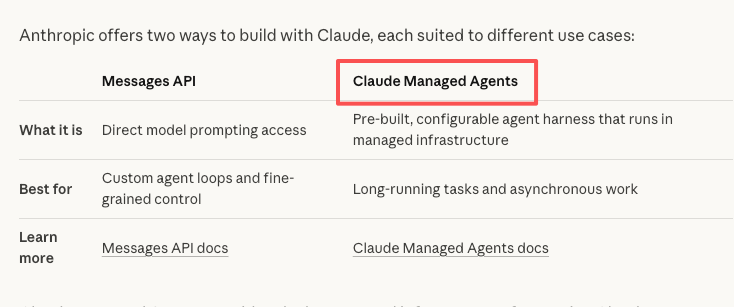
Managed Agents is built for teams and developers who need reliable, reproducible, production-grade agent execution — and who want to offload the infrastructure complexity of making that happen.
Anthropic positions Claude Managed Agents as capable of shortening agent deployment from months to days, handling complexity like sandboxing, orchestration, credential management, and end-to-end tracing without enterprises needing to build that layer themselves.
That value proposition is real — for the right use case. The initial user base includes Notion, Rakuten, and Asana. These are teams shipping agent-powered features into products used by millions of people. The infrastructure problem they're solving is a real one at scale.
For a solo operator building personal automation? The same infrastructure guarantees are available to you, but the question is whether the overhead of working within a platform API is worth it compared to simpler alternatives.
When Combo Skills Are the Better Fit
Combo Skills — AI workflow chains built directly inside an AI workspace — are a different kind of tool for a different stage of work.
Where Managed Agents handles the infrastructure of running agents reliably in production, Combo Skills are about composing repeatable multi-step workflows within a single work session. Think: research → summarize → structure → draft, all in one place, designed around how you actually work.
The distinction that matters: if you're a solo operator who wants to automate a repeatable personal workflow without managing API integrations or YAML configs, a Combo Skills approach inside an AI workspace is probably where you start. If you're shipping agent capabilities into a product that other people use, Managed Agents gives you the production reliability you need.
These aren't competing options. They serve different points on the same journey. A solo founder might use Combo Skills to build their own repeatable workflows, and Managed Agents if they eventually embed agent behavior into a product they're selling. Different people, different needs — and both are valid.
FAQ
Are Managed Agents Fully Autonomous?
Not exactly, and I'd push back gently on anyone describing them that way. Managed Agents is designed as a "meta-harness" — a system with general interfaces that allow different types of agent harnesses, from Claude Code to task-specific agents, to run within a stable infrastructure. The agent executes autonomously, but you define the task, the tools, and the guardrails. Human oversight at the design layer is still essential. "Autonomous execution" means the agent runs without you babysitting each step — not that it operates without human judgment about what it should be doing.
Do You Still Need to Write Prompts?
Yes, in the sense that someone still needs to define what the agent should do and how it should behave. The format shifts — you can describe an agent in natural language or configure it via YAML — but the quality of the agent's behavior depends directly on the quality of how you've defined its task and constraints. The prompting skill translates into agent design skill. It doesn't disappear.
Are They Safe for Business Use?
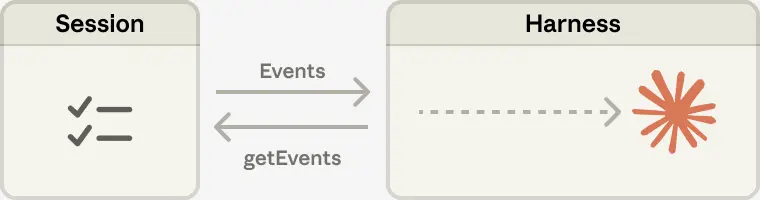
For most solo operators using standard Claude API token access without sensitive credentials attached to agents: the risk is manageable with reasonable scope controls. For anything involving production credentials, customer data, or financial access: be deliberate. Scope permissions tightly, review what your agents are actually doing in the session logs (Anthropic's console makes this possible), and don't give agents access they don't need. The Anthropic engineering blog post on Managed Agents covers how sessions and context are handled if you want to understand the architecture before committing.
Worth checking the current Claude Platform docs directly for the most up-to-date guidance on what's in public beta versus what requires separate access — this is moving fast and what's available will likely expand over the coming months.
Anyway, that's where this stands for me. Managed Agents is a real infrastructure shift — not hype. But the question for a solo operator isn't "is this impressive" — it's "does this solve a problem I actually have, and at what complexity cost?" That answer varies depending on what you're building.
I'll probably revisit this once the multi-agent and memory features come out of research preview. That's when the picture for individual operators gets genuinely interesting.
Previous Posts:
→ Understand how AI agents actually work for solo operators
→ See the practical difference between AI agents vs AI assistants in real workflows→ Learn how to design repeatable AI workflows instead of relying on one-off prompts
→ Explore what persistent AI agents are and why memory changes everything
→ Discover real-world AI agent use cases that actually translate into daily work
Get automation tips for your workflow
Weekly insights for non-technical professionals. No spam ever.